Every action, as it happens and afterwards
An agent's tool calls - actions, in the product - are recorded before they run and finalised when they return. That record is what you read in a session, what the Timeline and Trace tabs are built from, and what the integration's usage page lists across every session. This page is about reading it.
While a turn runs
Open a conversation with a turn in flight and each action appears above the composer the moment it starts: a spinner, then a tick or a cross once it settles, and the tool's name. A call that started another agent or flow carries a link to its session. The line …is working…, naming the agent, stays put for the whole turn. When the reply lands, the same calls are filed under it and the live tray empties - the stored message is the authoritative record.
For API consumers the same signal is the session stream: tool_call.started names the row and the tool, and tool_call.finished closes it with a status and a duration. See the API reference.
Reading a turn
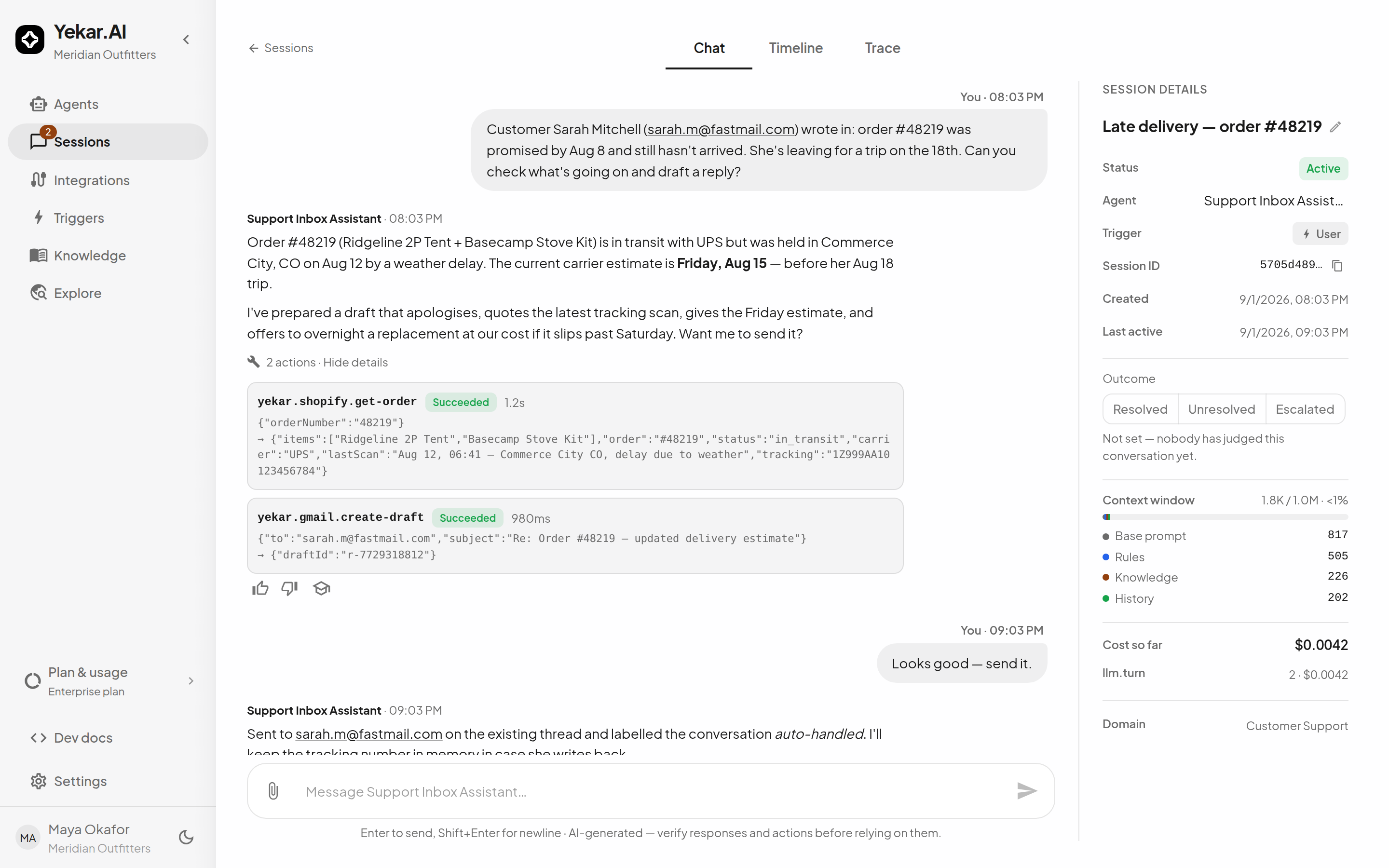
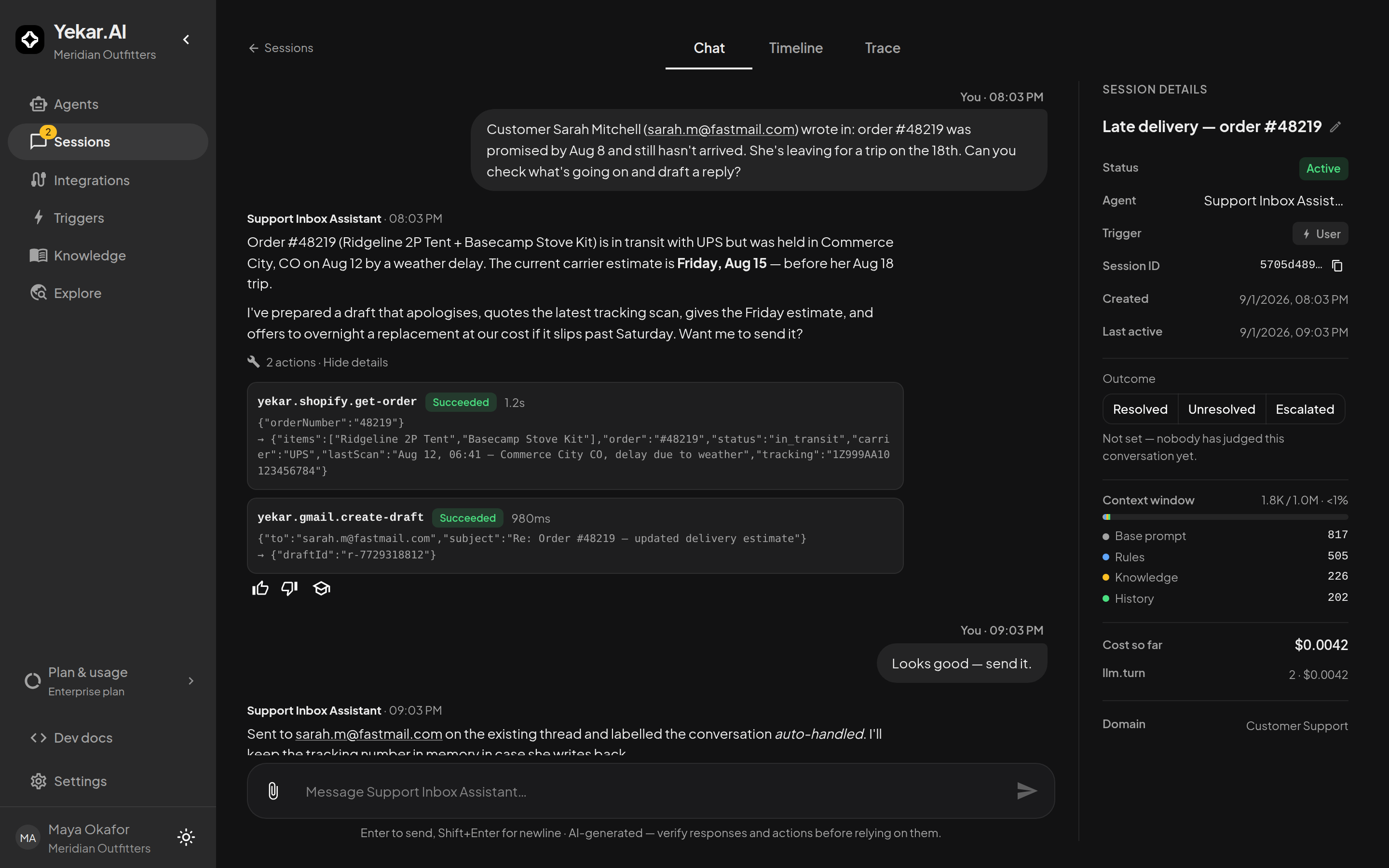
Beneath an assistant reply, the line N actions · Show details counts what the turn did, and how many failed or spawned a subagent. Expand it and each action is a card:
- the tool name, in the form
integration.tool; - a status chip - succeeded, failed, waiting approval, or running;
- the duration;
- the input the agent sent and the output the tool returned, as recorded.
A card still marked running after the turn has ended is not a live call. It means the record was opened but never finalised - the process was interrupted mid-call - and it is the evidence you would otherwise lack. The Timeline files the same call as started, outcome unknown.
Credential material never appears in a recorded input or output. Keys are removed by name and known secret formats by value, and the shape is kept, so Authorization: Bearer [REDACTED] still tells you which header the tool used. A call that failed at the turn level shows its error code and message on the reply itself.
Calls that started another agent
A call that spawned an agent or flow says so on its card - Spawned subagent or Spawned flow, its name, its current state, and Open its session. While the child is waiting on something the card says what, in the child's own words: the question it asked, or the write it wants approved. Consecutive spawning calls fold into one block with a tally. The whole model is in Calling other agents.
Timeline
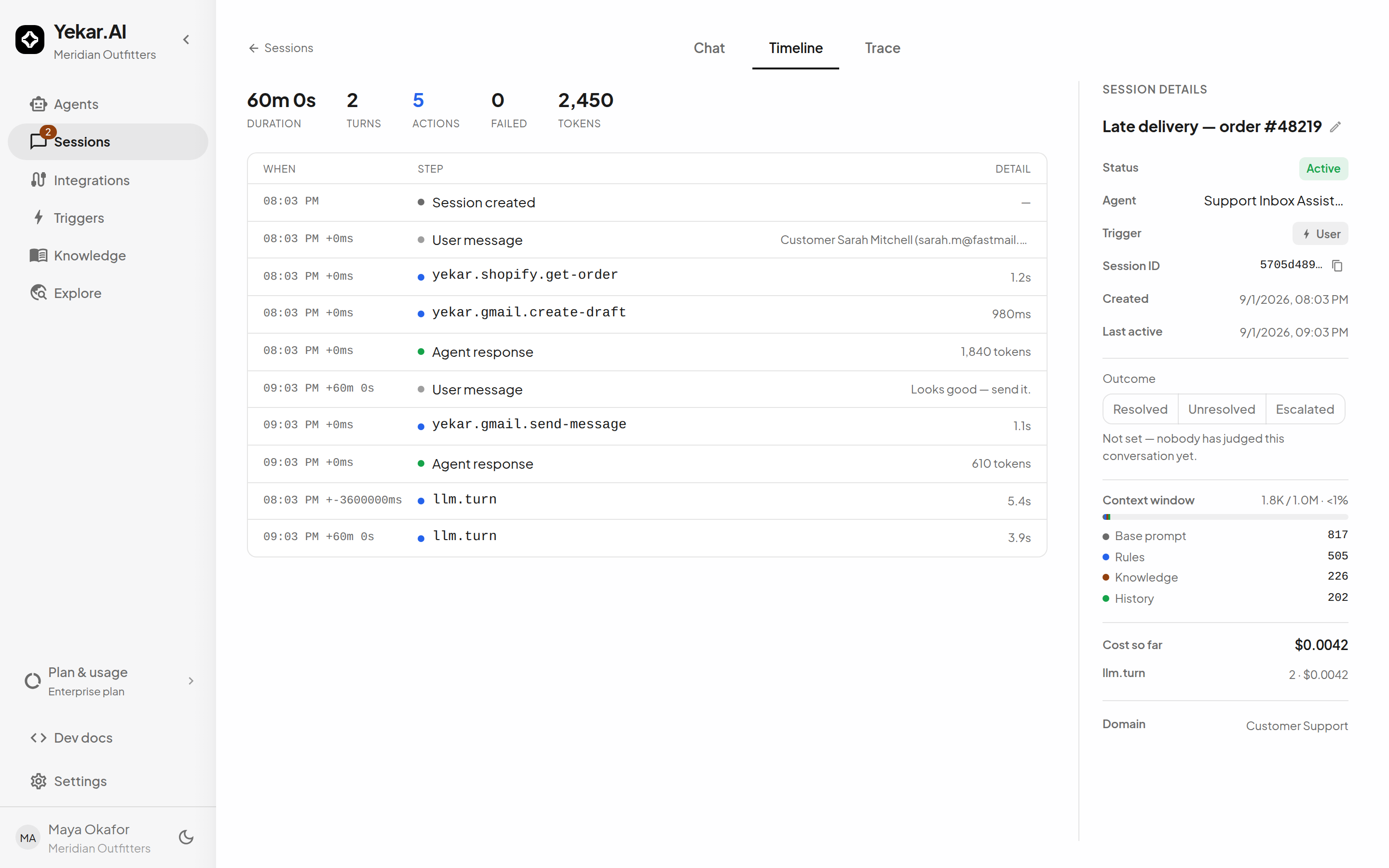
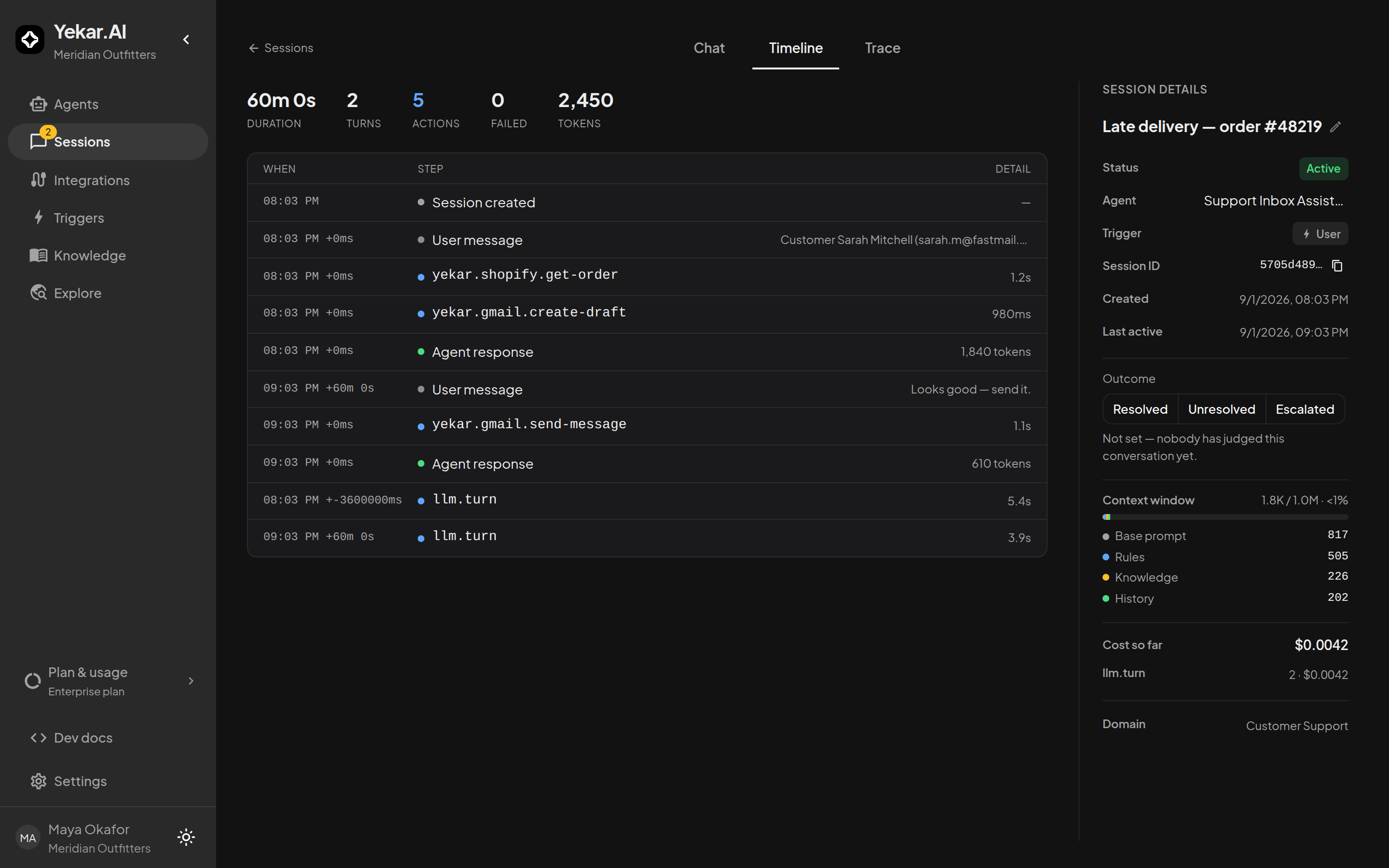
The Timeline tab lays the conversation out as an ordered record: session created, each message, each action with its duration, each error. The tiles across the top - duration, turns, actions, failed, tokens - are counted over the entire session in the database, so they stay true however long the conversation grows; the rows beneath them cover the messages currently loaded. Duration is the span from first message to last, not execution time.
Trace
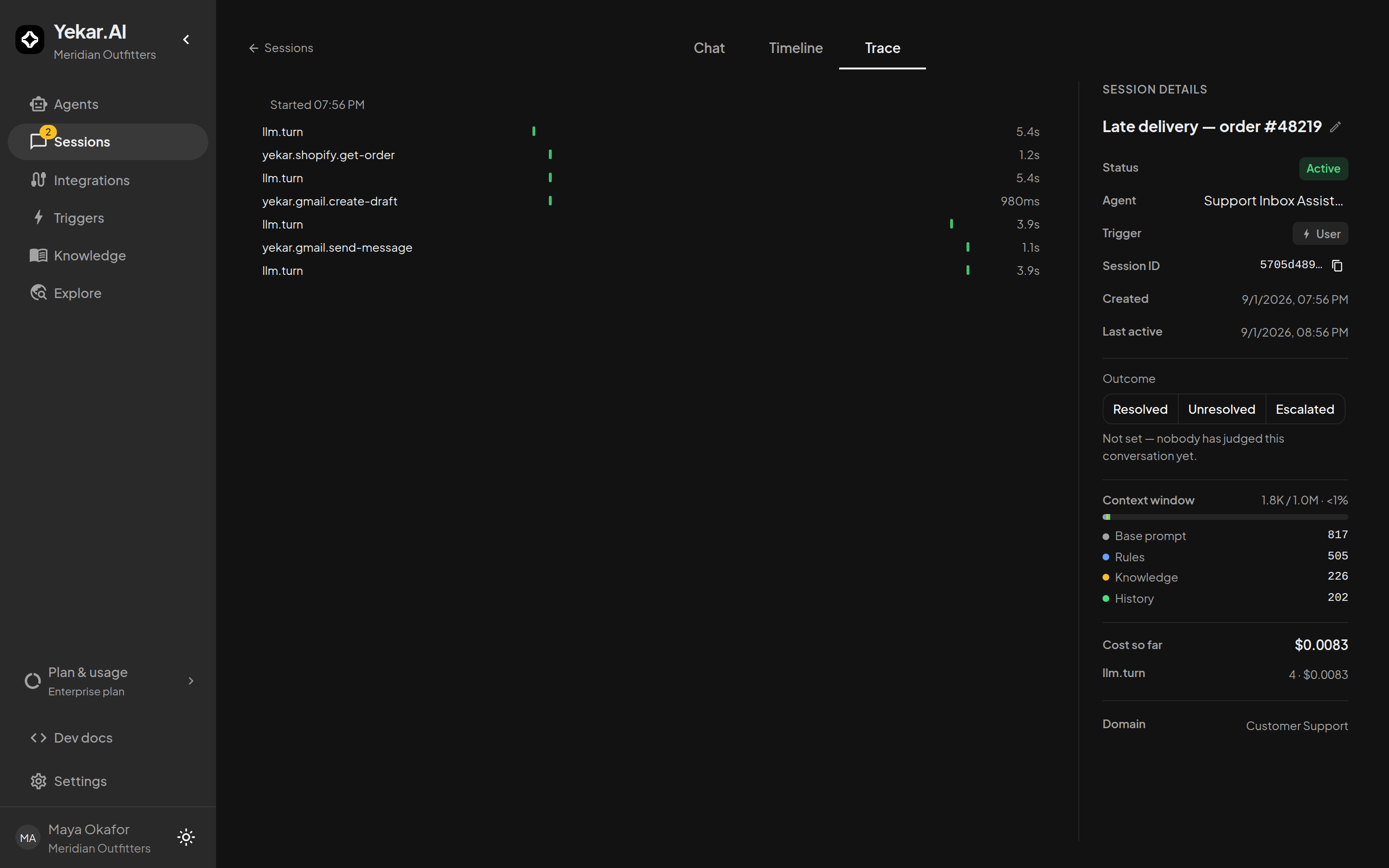
The Trace tab lays the same record out on a time axis: every turn, flow run, step and tool call as a bar you can compare. A bar that fades out is still running at the time of the fetch - the trace never pretends something ended. It carries names, statuses and times only, never payloads. Long sessions are windowed, and the header says exactly what was left out.
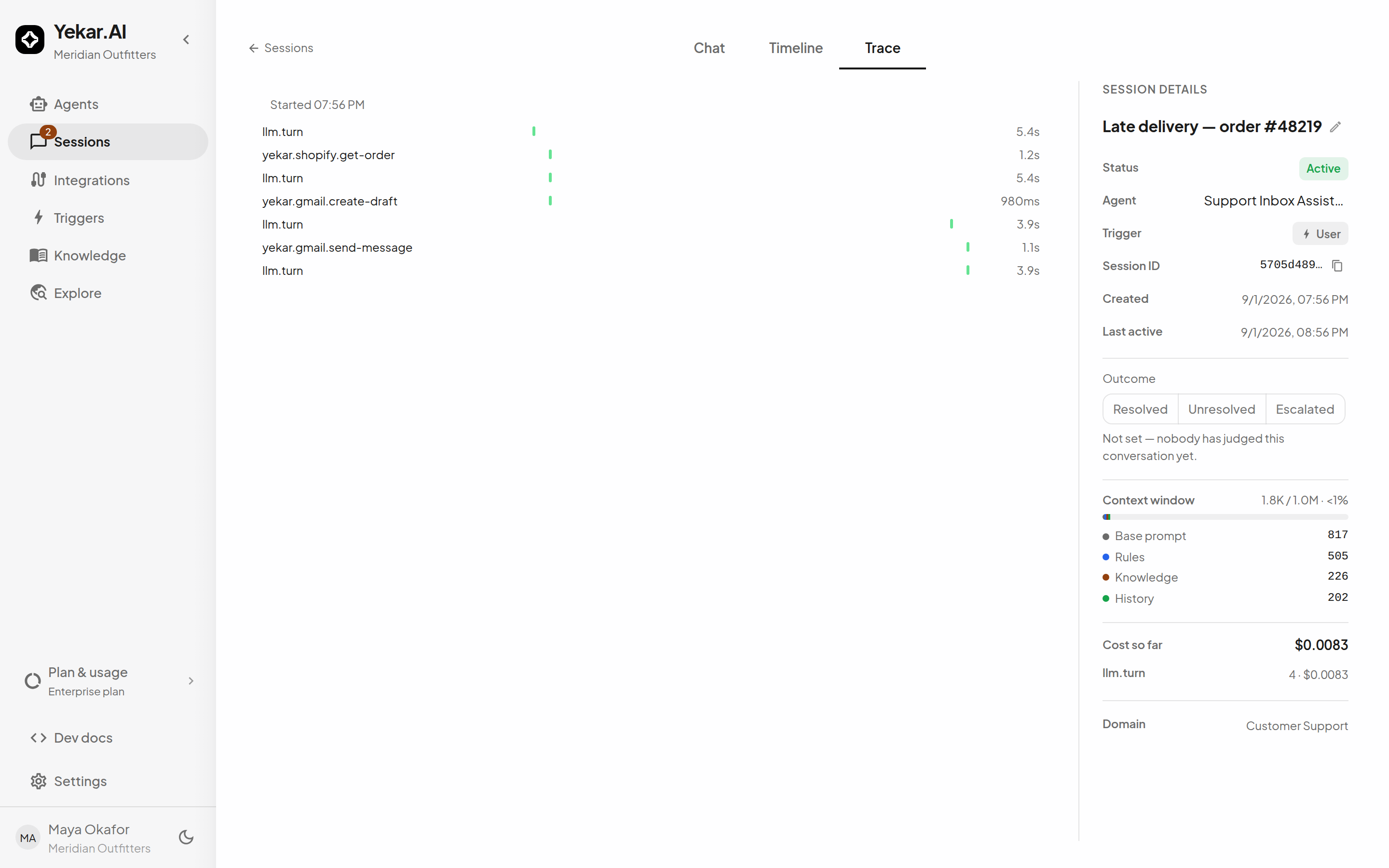
A Flow session has a Run tab instead of Timeline. Expand a run, select a step, and the inspector shows the step's resolved input, its output, and one card per tool attempt.
Across sessions: an integration's usage
To see what agents did through one integration regardless of session, open the integration under Integrations and select Usage. It is scoped to a domain's connection, and reads for the domain's owners.
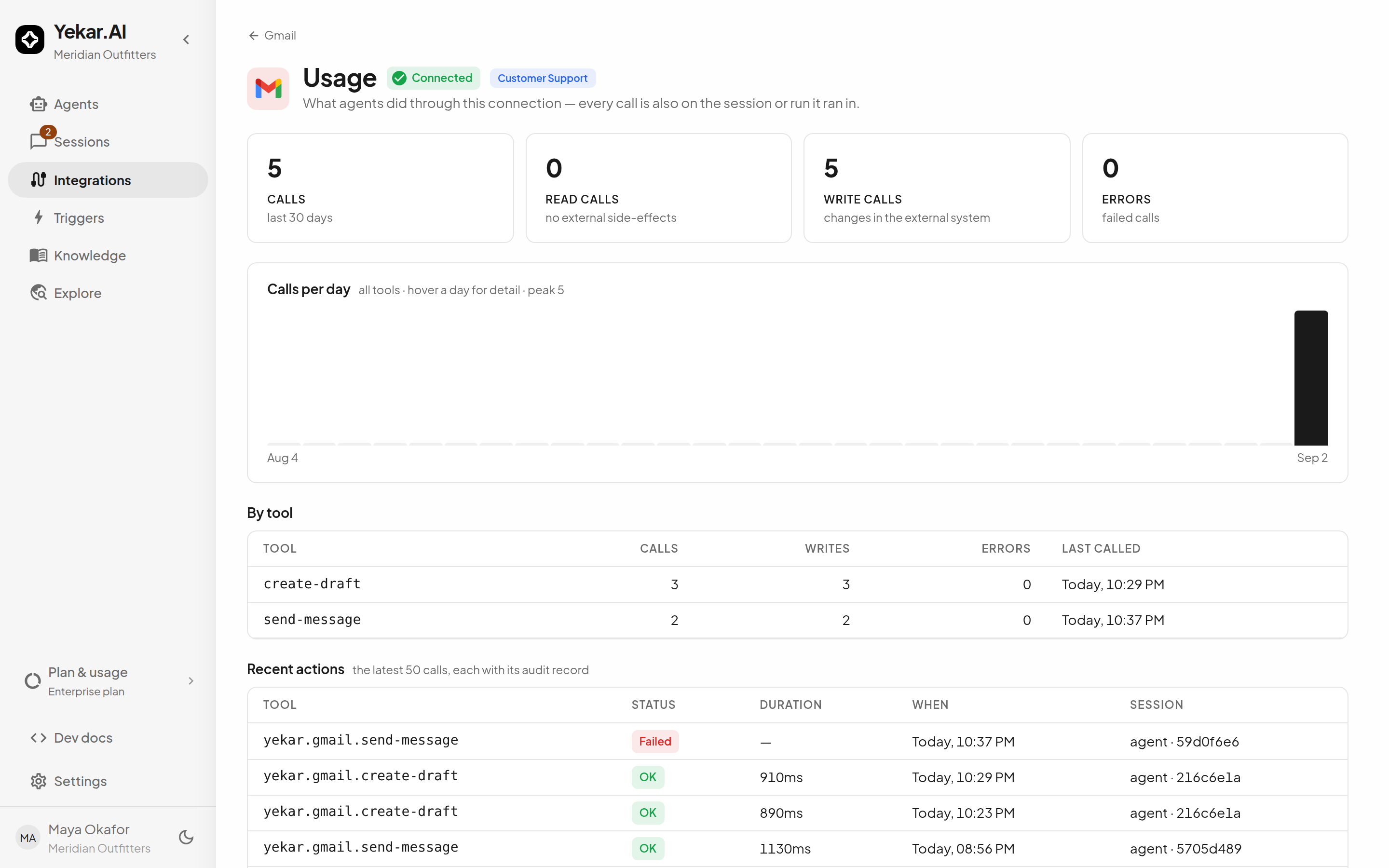
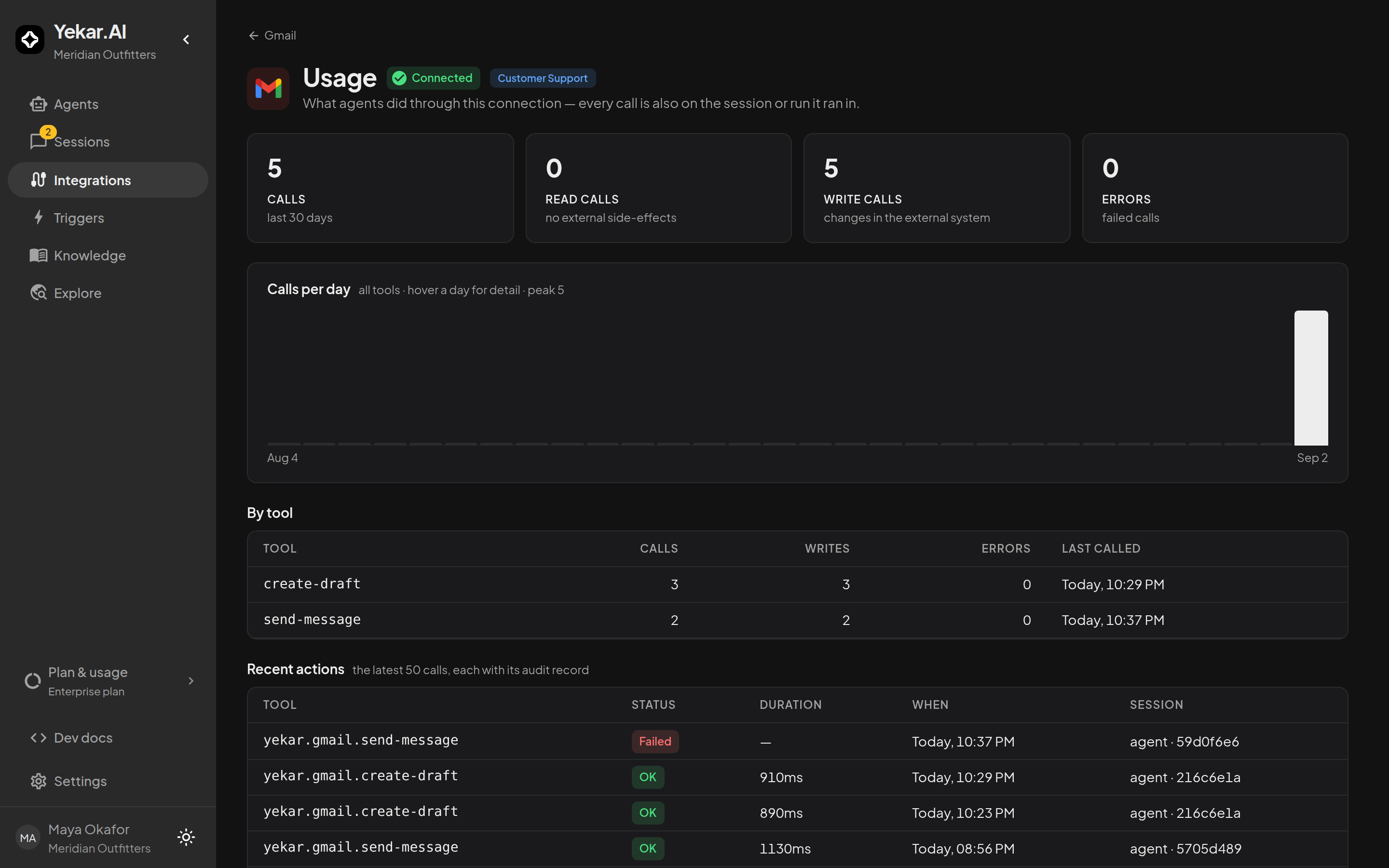
- Calls, Read calls, Write calls and Errors over the last 30 days, and a calls-per-day chart.
- By tool - calls, writes, errors and last called, per tool.
- Recent actions - the latest fifty calls with status, duration, time and a link to the session or run they ran in; a Test chip marks a step test.
Every call here is also on the session it ran in; this page is the cross-section, not a second record.
What survives, and for how long
Action records are pruned after 90 days by default; transcripts are never pruned. Open a conversation older than that and you will read every message, attachment and error, but the actions line will be gone, the Timeline will count zero actions, and the Trace will show turns without their calls.
What outlives the prune: the per-turn census behind an agent's Health page (tool names, counts, tokens, durations - facts, never bodies), the daily cost rollups behind Cost, and the audit trail of approvals, which is permanent. A golden eval case keeps its own copy of a recording at the moment it is saved, for the same reason.