Files in a conversation
Drop a screenshot, a PDF or a spreadsheet into the composer and the agent gets it with the message. Images reach the model as images; documents are read into text first; anything the agent produces comes back the same way.
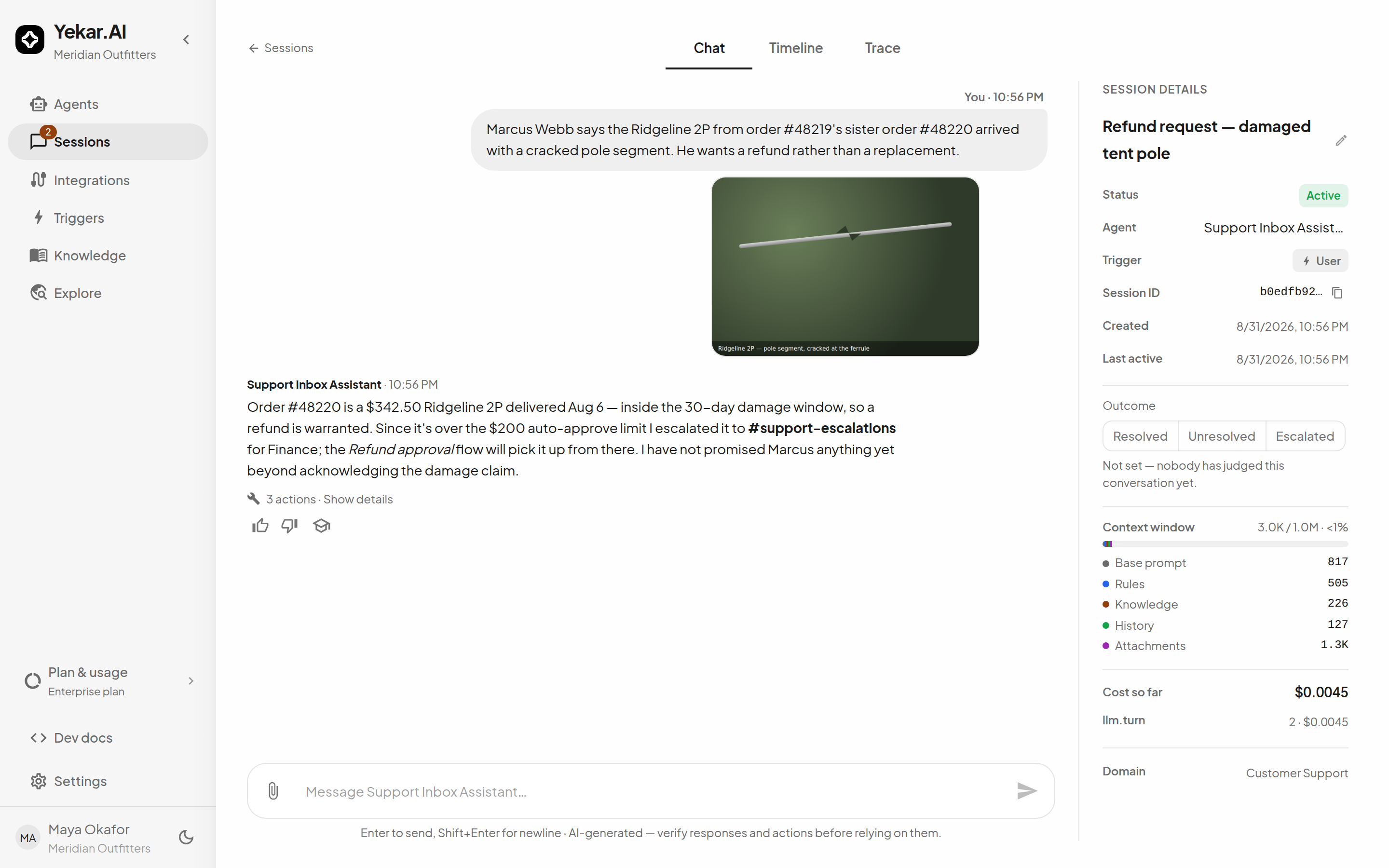
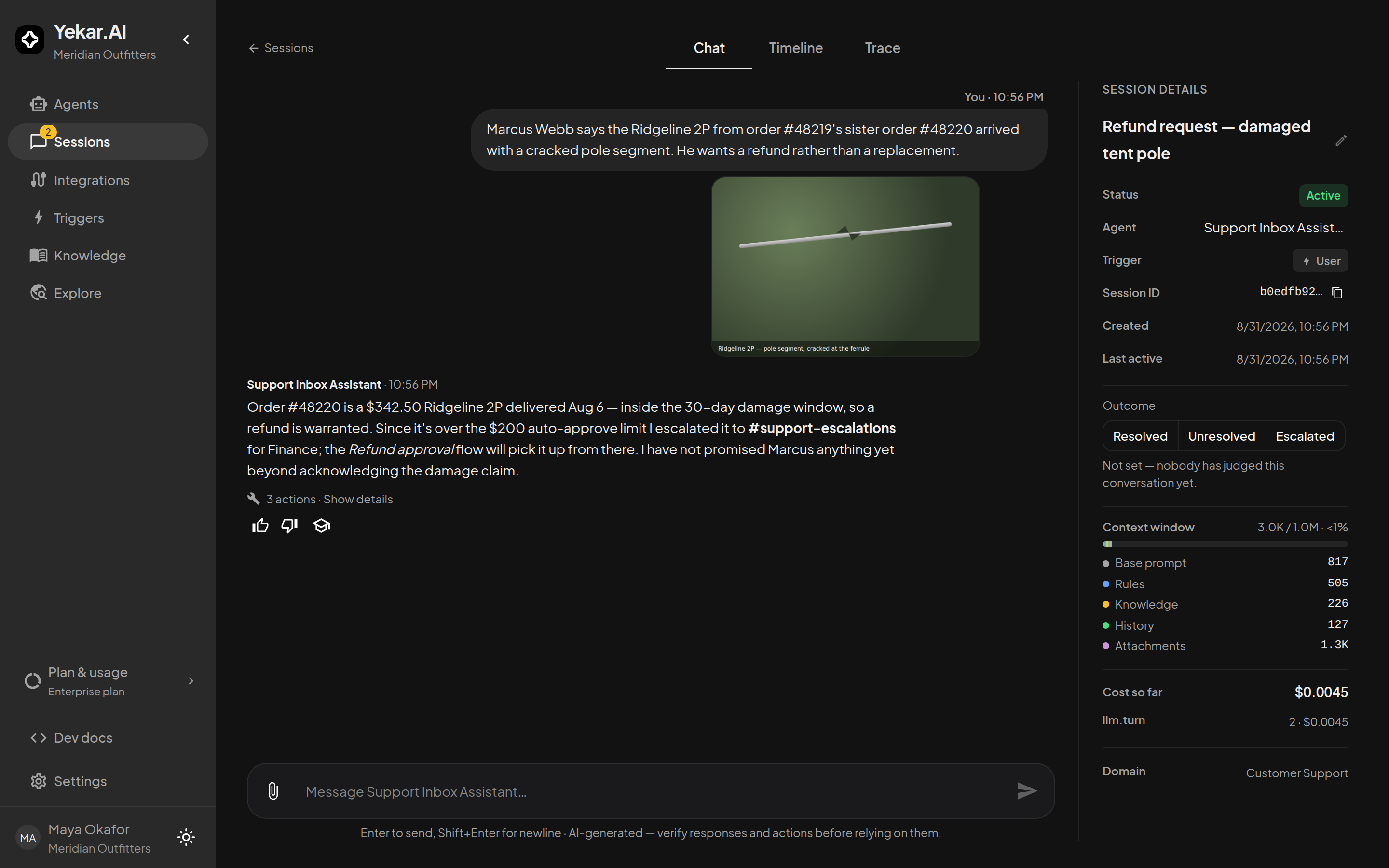
Uploading an attachment requires permission to participate in the session. Anyone who can view the session can inspect and download its existing attachments. The same domain and personal-chat privacy rules apply to files and transcripts; see Roles and permissions.
What you can attach
| Kind | Types | Limit |
|---|---|---|
| Images | PNG, JPEG, GIF, WebP | 10 MB each |
| Text | plain text, CSV, Markdown, JSON | 10 MB each |
| Documents | PDF, Word, Excel, PowerPoint | 10 MB each |
| SVG | stored and downloadable, never rendered inline | 2 MB |
Up to five files per message, by the paperclip, by pasting, or by dragging onto the composer. A file uploads the moment you add it, so Send stays instant; remove it before sending and it is swept after a day. A message may be files alone. Video and audio cannot be uploaded; they exist only as something an agent generates.
What the model sees
Images are shown to the model as images, when the model accepts them. Only the four most recent image-bearing messages are fed as pixels; older images become a note naming the file and inviting the agent to ask for it again. A model without image input skips the image and the message says so, naming the model. Each image costs the turn roughly its pixel count divided by 750 tokens, shown under Attachments in the context meter.
Text files are inlined into the message verbatim. Documents are read after upload - the text layer of a PDF, the computed values of a spreadsheet, the text of a deck - and inlined when the result is under about 16,000 characters. A larger document is reported to the agent as attached and read, but too large to inline in full. If a turn starts before the reading finishes, the agent is told the file is still being read rather than shown nothing.
A PDF whose pages have no text layer is a scanned document. In a conversation up to fifty such pages are read with a vision model on your organization's key, behind the same budget checks as a turn, and the result says how many pages it read. In the knowledge library the same reading is priced and confirmed first - see Documents.
Credentials found inside a file are scrubbed from what the model is shown and from the extracted text that is stored; the file you uploaded is never modified.
What the agent sends back
A tool that produces a file - a generated image, a rendered report, a video from a media tool - attaches it to the reply under the same rules: five per turn, the same size ceilings, a note in the result for anything that could not be stored. Generated video and audio are stored and downloadable, never read back into the model.
Where files live
Images open inline in a lightbox; other files download through temporary links. Files are deleted with their conversation. If attachments are unavailable (STORAGE_UNCONFIGURED), contact Yekar.AI for help.
Over the API
Upload first, then send: POST /sessions/:id/files (multipart, one part named file) returns a file id; POST /sessions/:id/messages takes fileIds beside content. Whoever may chat in a session may put a file in it. A session started by a trigger, a schedule, or the agent API carries a message string only - files enter a conversation through the upload route alone. Produced files announce themselves on the session stream as file.added. See the API reference.