Documents and written articles
Everything your team already knows - return policies, shipping SLAs, warranty playbooks, price lists - becomes something your agents can quote from, without anyone rewriting it for a machine. Drop the file in and it is searchable minutes later.
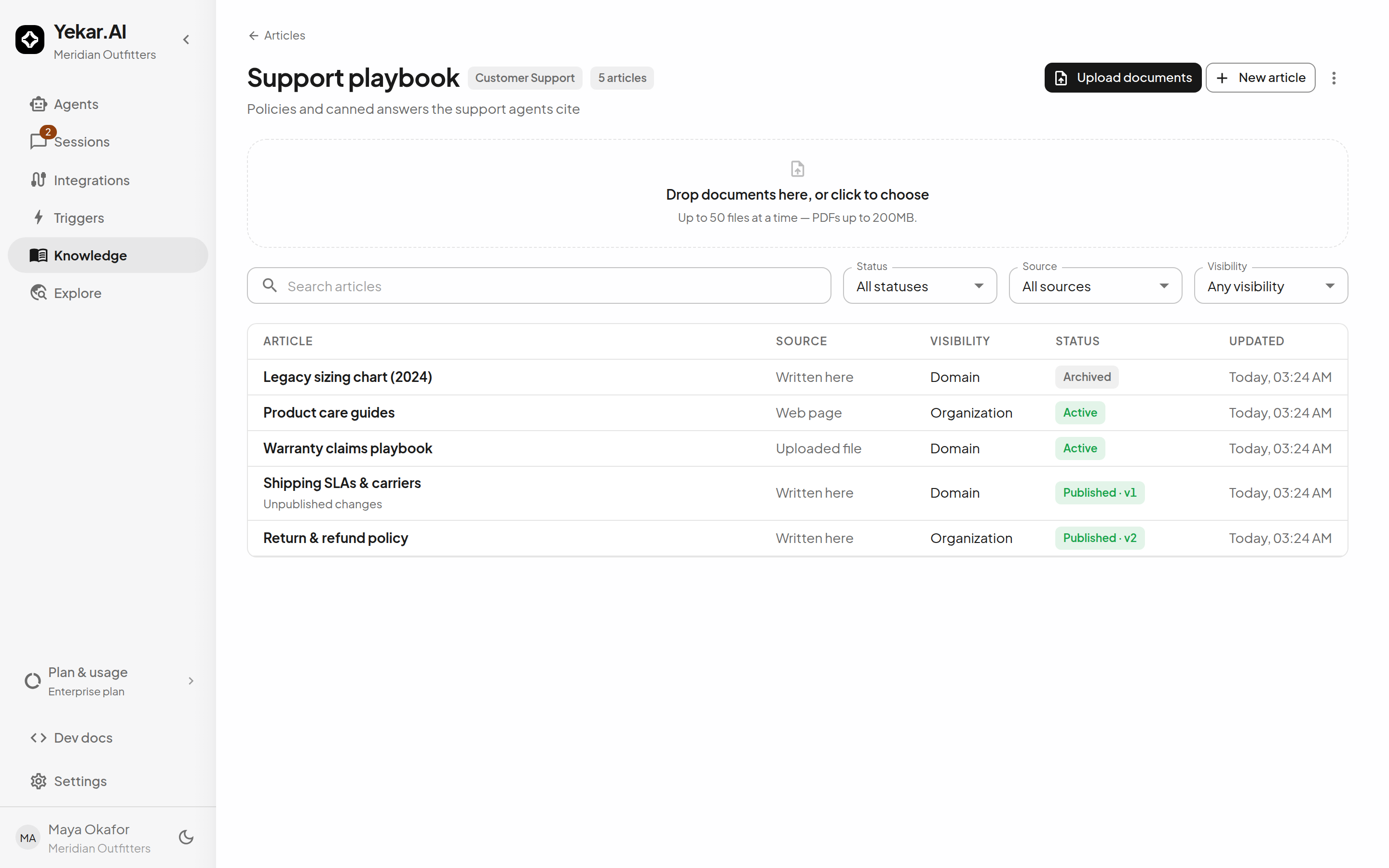
An article is one item in a knowledge base, and it arrives one of four ways. How it arrived decides its journey:
- Upload a document - drop files onto the base (up to 50 at a time, PDFs up to 200 MB). Each becomes a document that flows to searchable on its own; you never press anything else.
- Crawl a page - the article is filled from a public URL and follows the same automatic journey as an upload. Browser must be connected for your organization to crawl or re-crawl a page. It reads the rendered page, including content loaded by JavaScript.
- Write it - an editor authors the article in Markdown, and this kind is drafted and published explicitly, like Agents and Flows.
- Capture it from an Agent's answer - an answer people were happy with, where the library had nothing to say, becomes a draft article verbatim (see Learning from runs). It is drafted and published explicitly, exactly like a written article, and it remembers which reply it came from.
Uploaded and crawled documents: three states
A document you upload shows exactly one of three states, and nothing else:
| State | Meaning |
|---|---|
| Processing… | We're reading and indexing it. Nothing to do - the list updates itself. |
| Active | Searchable. Agents with a matching selection can use it. |
| Failed | It couldn't be read. The row says why, in plain language, with a Retry button - retry re-reads the stored file; you never re-upload. |
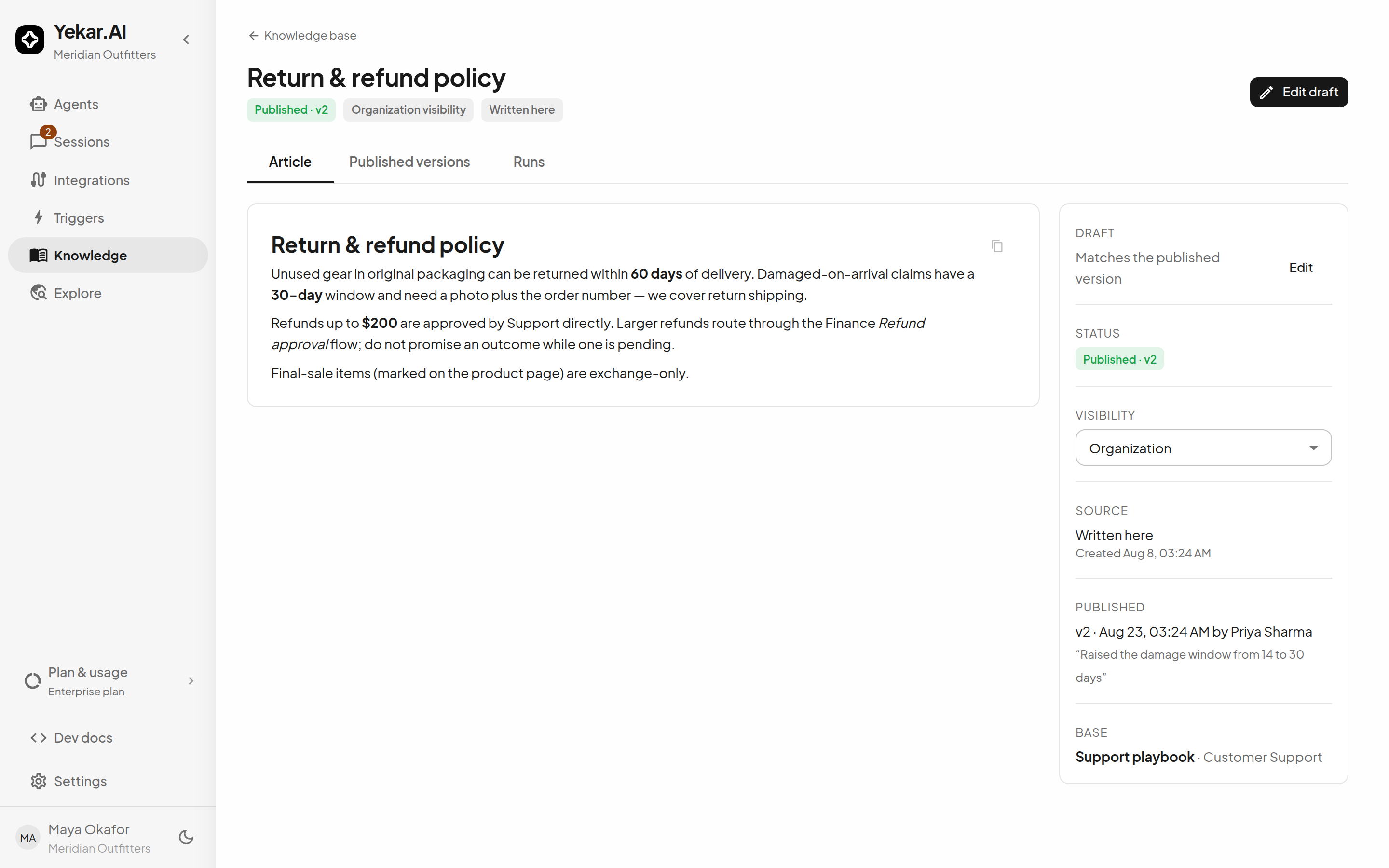
Opening a document shows the original file - a PDF renders as a PDF, other files download. When an agent cites a document, the citation opens the original at the cited page. Your reviewers check the source, not a paraphrase of it.
Removing a document archives it: it stops being used for answers, and answers that already cited it keep their record.
Scanned pages and OCR
A PDF whose pages carry no text layer is a scanned document, and reading it means a vision model transcribing each page on your organization's own key. That costs money, so the document stops at a gate first: Review OCR shows how many of the pages are scanned, which model would read them, an estimated cost range and an estimated time. Nothing is spent until you confirm. The range is wide on purpose - input tokens vary with page density, and output is capped per page.
Run OCR reads the pages, passing the same monthly budget checks as an agent turn, and records how many it read. Decline OCR is a recorded decision: extraction keeps the text layer that exists, the scanned pages stay unread, and it costs nothing. Either can be reconsidered from the document's page. An organization can also give a standing confirmation, in which case the estimate is still priced and shown but no dialog is raised. See Cost & budgets.
Written articles: draft, publish, versions
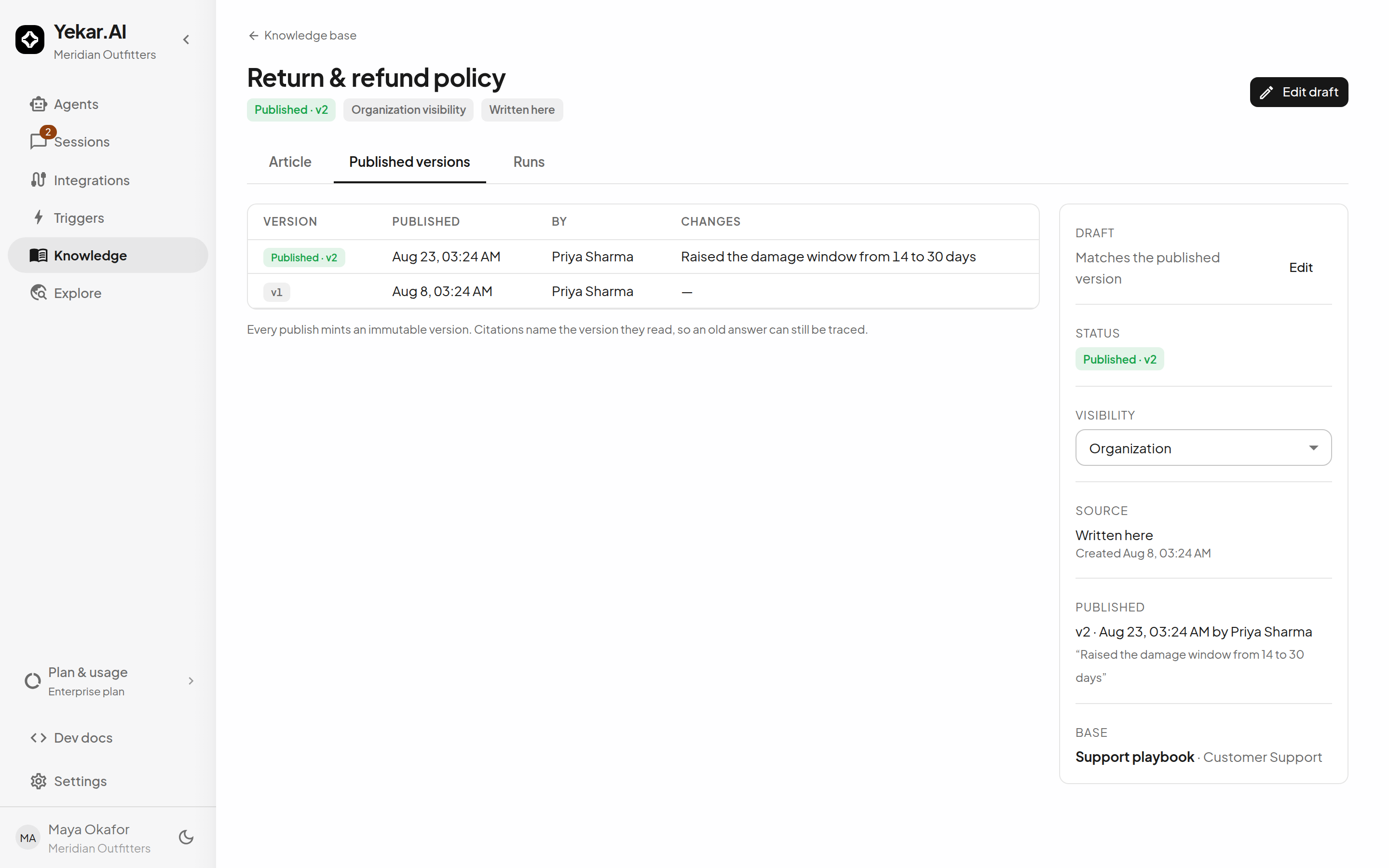
A written article keeps the authoring discipline: editing changes its draft (autosaved, marked Unpublished changes), Publish makes a numbered version live - with an optional change note - and the Published versions tab keeps every prior version readable. Versions are append-only; rolling back is publishing again from an older body, recorded as a new version. What an Agent reads is always a published version, never someone's work in progress.
Visibility, runs, and archive
- Visibility -
domain(its own domain only) ororg(usable across the organization). Articles in organization-owned bases always useorg; domain-owned articles can use either. The same rule applies to written articles, uploads, crawled pages, and captured answers. - Runs - where this article's content was actually used.
- Archive - retires an article without deleting its history. Anything ever published can only be archived, never deleted.
Tips
For an uploaded document, the state chip is the answer: Failed says why and offers Retry. For a written article, a draft with Unpublished changes is not live until published. See Using knowledge in Agents for the retrieval side.