Bring your own integration
The system that matters most to your business is usually the one nobody builds connectors for - the in-house warehouse tool, the internal pricing service, the vendor with an API and no partner programme. Yekar.AI treats those as first-class: describe your own REST API as tools, or import a running MCP server, and your agents use them exactly like Gmail or Stripe. Both live under Integrations → Built by you and behave like any other integration once defined - connections, identities, approvals, and audit all apply.
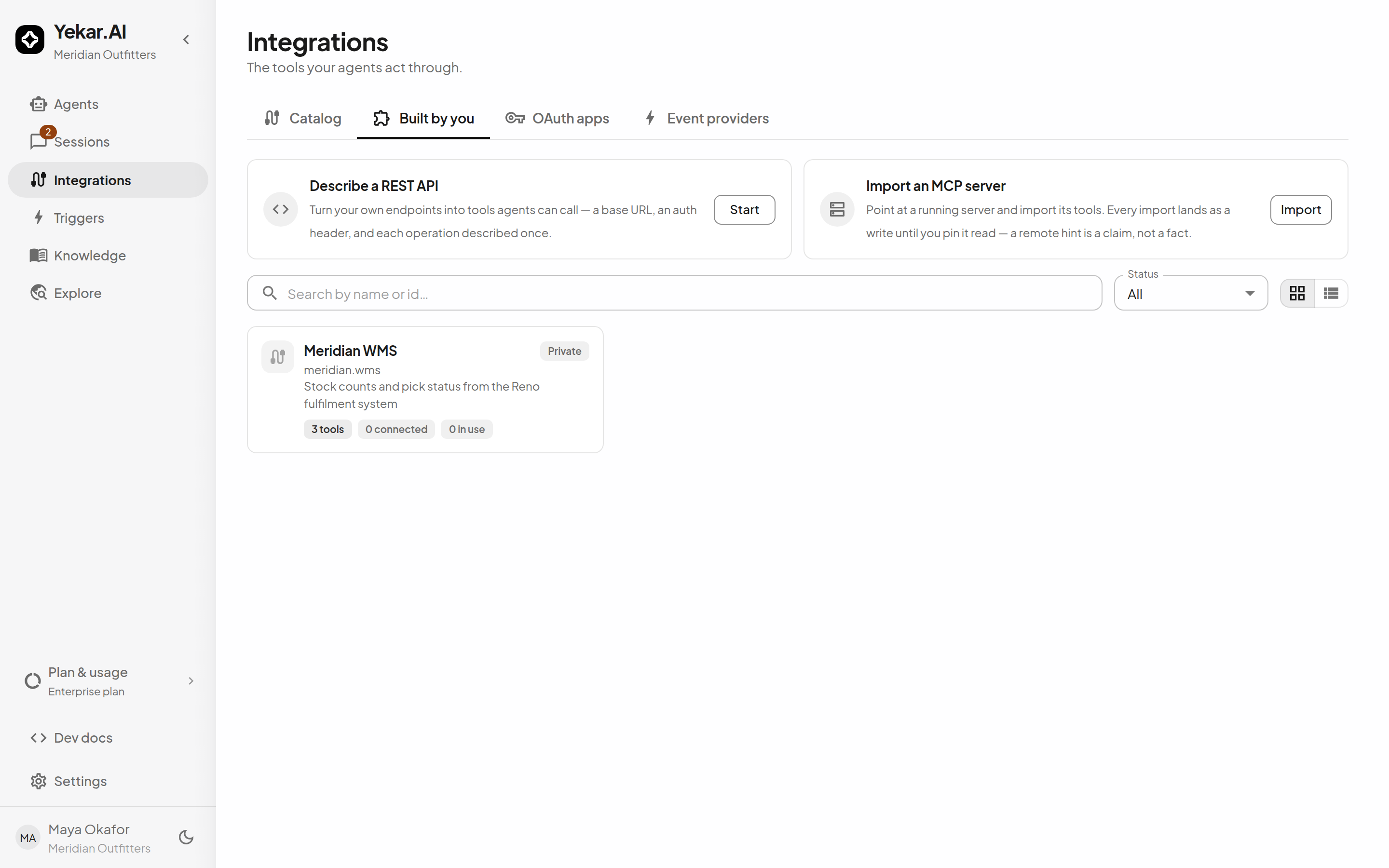
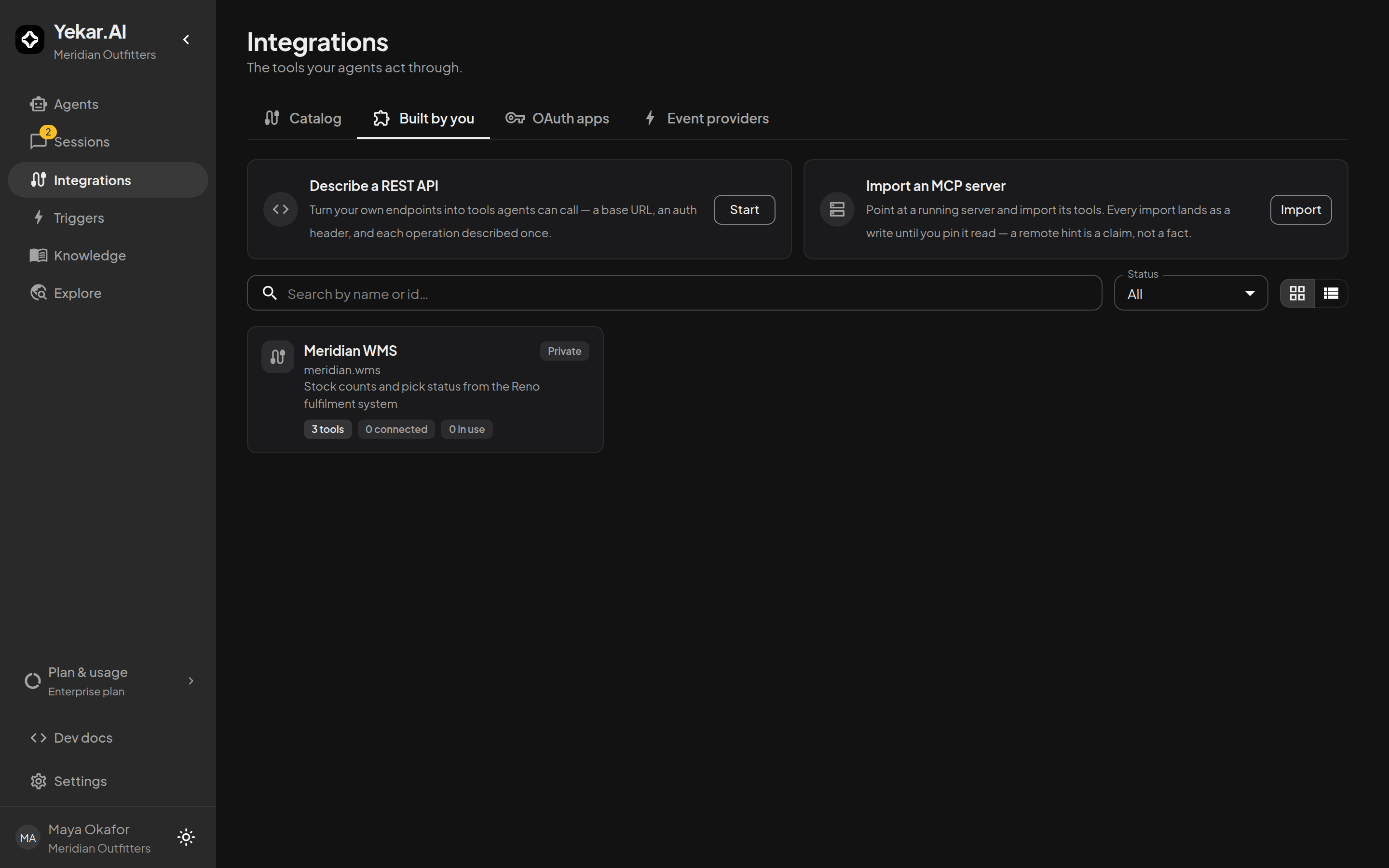
Two ways to create one
From Integrations → Built by you, choose:
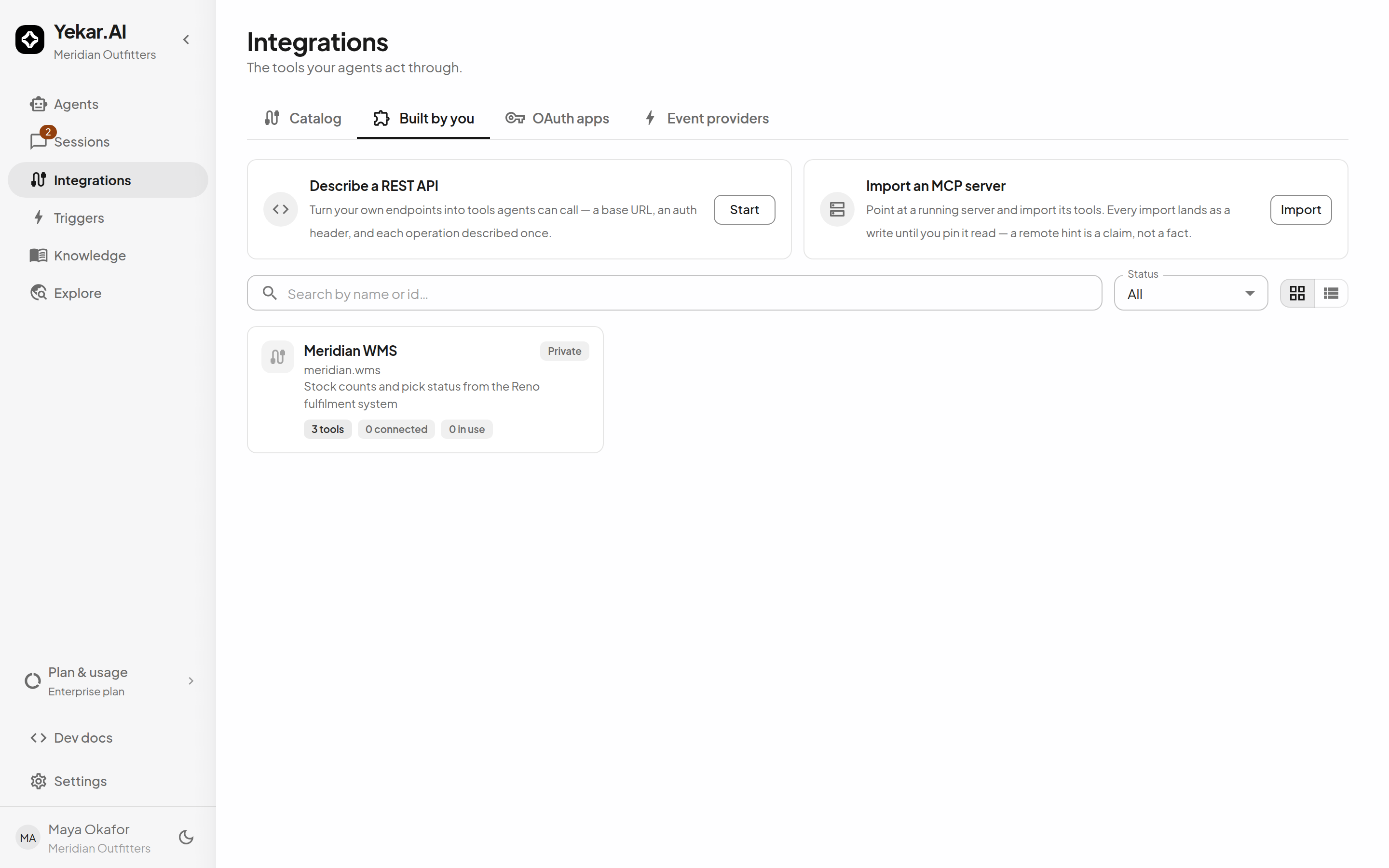
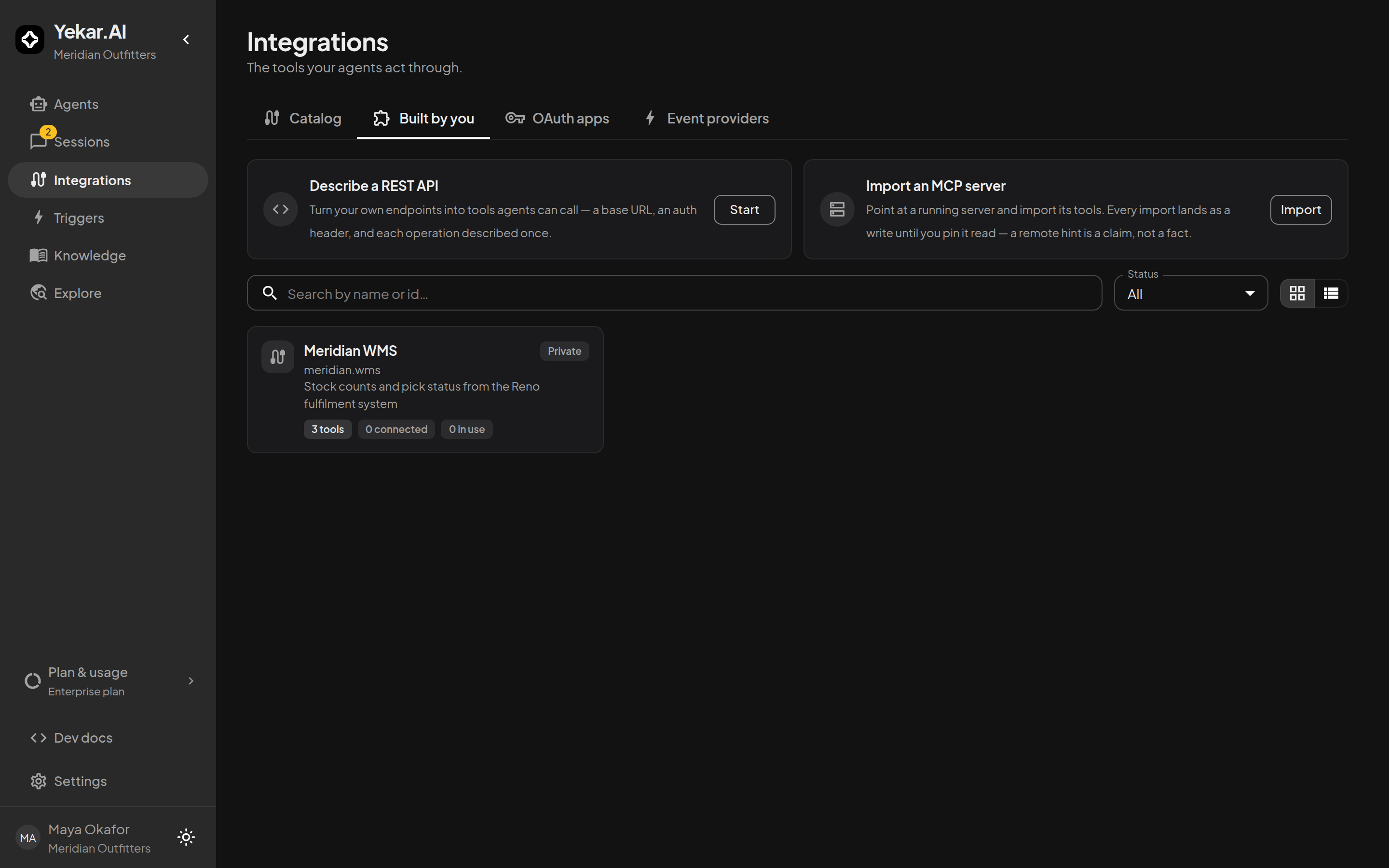
- HTTP API - describe your own REST endpoints as tools: the connection's fields (properties and secrets), and each tool's method, path, and typed inputs.
- MCP server - import a running Model Context Protocol server's tools, then pin each one's read/write nature.
A defined integration is private to your organization until Yekar.AI reviews it for wider release. Namespaces make ownership visible: defined integrations are identified as <publisher>.<name>, distinct from the shipped yekar.* catalog.
HTTP API definitions
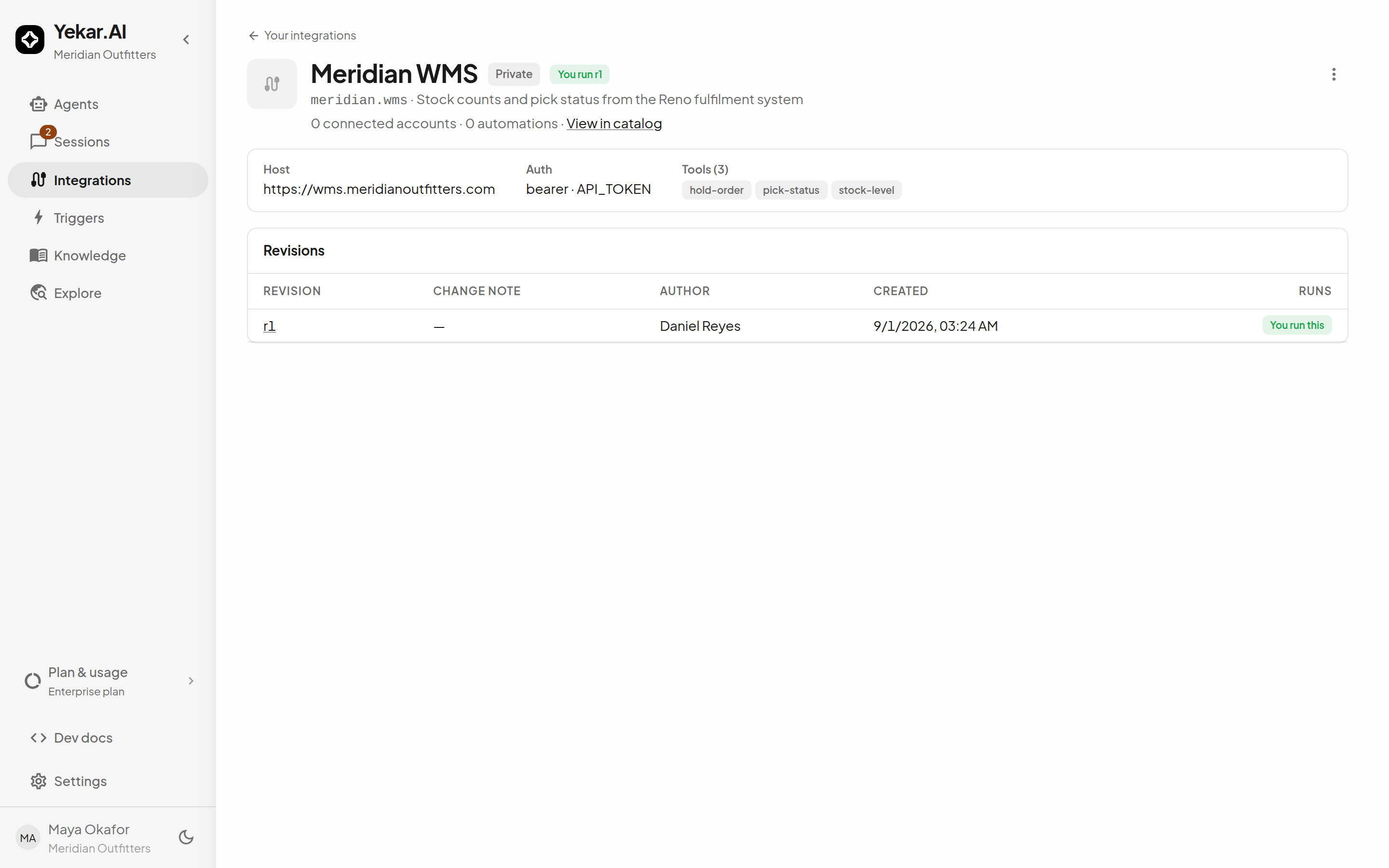
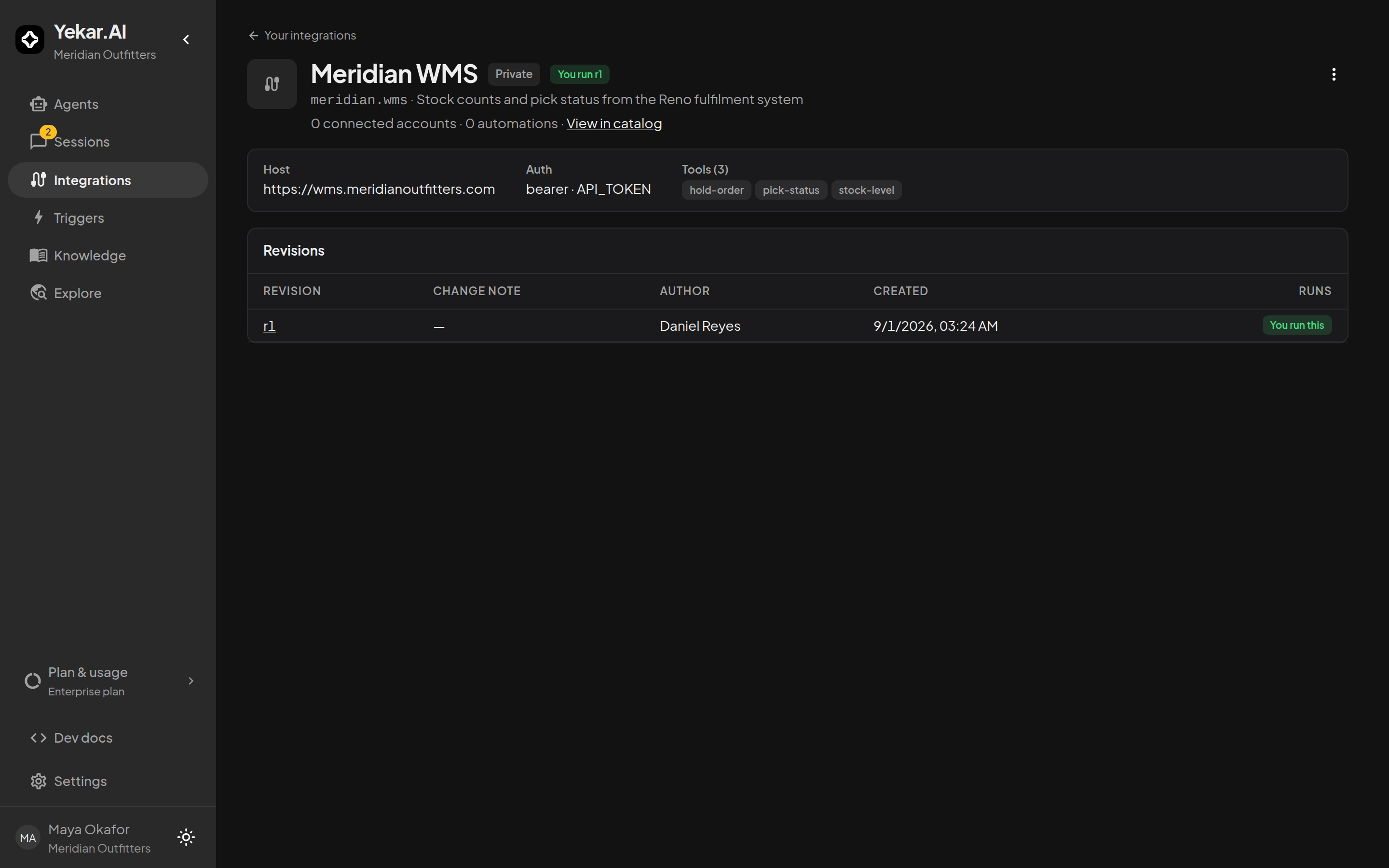
A definition declares connection fields and tools; agents reference the tools with # exactly like catalog tools, and Flows call them as steps. Definitions are versioned as append-only revisions - editing creates a new revision, and you choose when it becomes the one connections use. Reviewed definitions may be shared with specific organizations or made global, according to the grants they receive.
Import from MCP
The MCP import connects to the server, discovers its tools, and synthesizes a definition:
- Enter the server's URL and, if it needs one, a discovery token. The token is used for discovery only and is not stored - the organization connects afterwards through the ordinary connection flow.
- Review the discovered tools and complete the import. Large servers are supported (up to 200 tools per definition).
- Re-sync later to pick up server changes; your per-tool pins are preserved across re-syncs by tool id.
Some catalog integrations are MCP under the hood
A few shipped integrations reach their vendor through MCP rather than a REST API - CrowdStrike Falcon (against a falcon-mcp deployment you run) and Granola (against Granola's own hosted server). Those are typed façades: the remote tools they call are pinned in Yekar.AI's code, which is what lets their reads register as reads instead of inheriting the everything-is-a-write caution below. You connect them like any other catalog integration; no import is involved.
Imported tools are writes until you say otherwise
An MCP server may claim a tool is read-only (readOnlyHint), but that claim is unverified third-party metadata. Yekar.AI surfaces the hint advisorily and stores every imported tool as a write - so approval gating and audit treat it with full caution until you review and pin it. This is deliberate: a wrongly-trusted "read-only" hint would silently make the call eligible to batch in parallel and would record a mutation as a read in the audit trail.
The other direction
This page is about your agents calling someone else's MCP server. Yekar.AI also serves one: an MCP client can list your published agents as tools and call them, with no code and nothing to install. See MCP server.
Tips
If an import fails at discovery, verify the server URL is reachable from Yekar.AI and the discovery token is current. If a tool call fails after a re-sync, compare the pinned tool against the server's current schema - the pin preserves your choice, not the server's old behavior. See Troubleshooting.