Write the Procedure and Principles
You use Setup → Procedure to tell the Agent what to do, step by step, and Setup → Principles for the rules that apply throughout. The Procedure is guidance the model interprets - write it the way you would brief a careful new teammate.
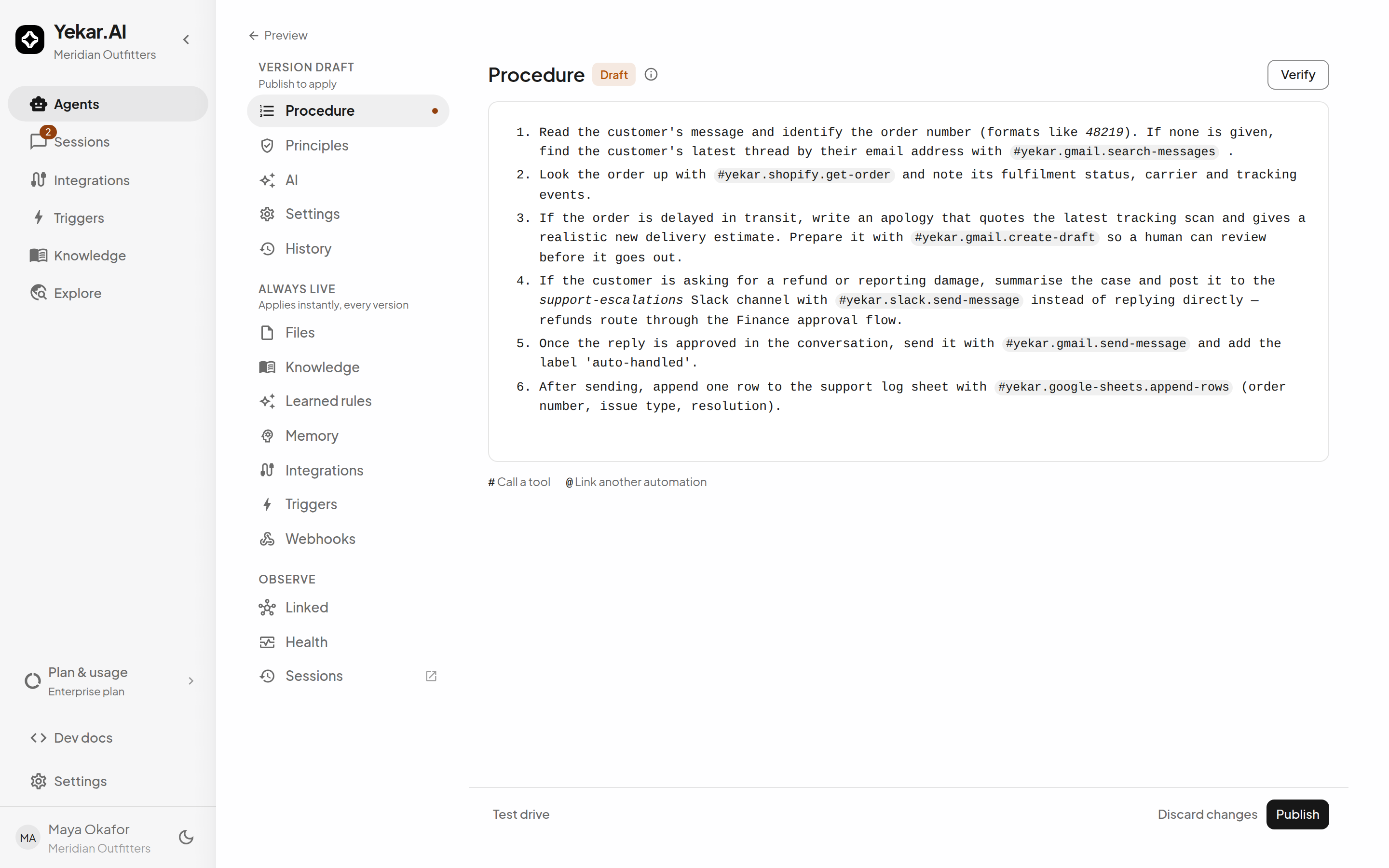
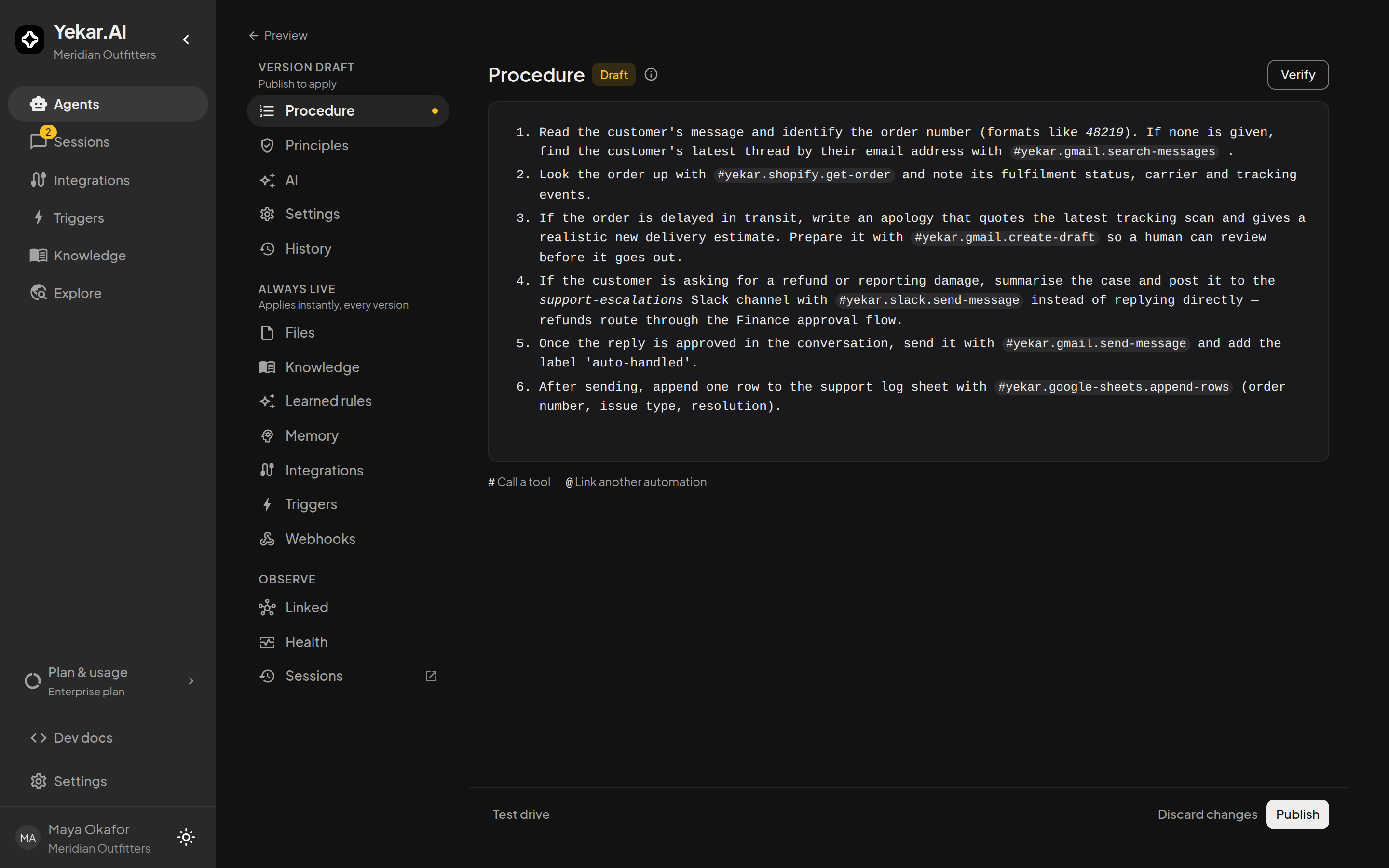
Write an ordered procedure
Open Agents, choose the Agent, then select Setup → Procedure. Write numbered steps with explicit inputs, decisions, and expected results:
- Name the signal to look for - "identify the order number (formats like #48219)".
- Name the decision points - "if the order is delayed in transit… if the customer is asking for a refund…".
- Name the outcome - what done looks like, so the Agent knows when to stop.
Keep outcome criteria in the Procedure. Use Principles for anything that should hold on every step - tone, escalation rules, hard limits - rather than repeating it inline.
Reference tools with #
Type # where the Agent should use a tool and pick it from the menu. The reference is inserted as a chip carrying the tool's id - #yekar.shopify.get-order, #yekar.gmail.send-message - and that reference is what wires the Agent: the Integrations drawer reflects the referenced set, and you do not add an Agent integration manually.
Type @ to link another agent or flow the Agent may call.
Select Verify to check the references before you rely on them: it confirms every # reference resolves to a tool the Agent can actually reach, and flags anything that looks like a reference but isn't - a plain #hashtag in the instructions gets called out so it can be reworded or bound.
Reference files and articles
In Procedure, type / and search for an uploaded file or a published knowledge article. The picker lists ready files attached to this Agent and articles included by its current Knowledge selection. Select a source to insert a named reference. This shortcut is available in Procedure only and requires Standard response mode.
For example, write "Check the payment against ", type /, select PaymentReceipt.pdf, then continue the instruction. Selecting the source inserts a chip; typing a filename or article title as plain text does not create a reference.
References identify the source by ID, so renaming it does not break the link. Each run loads the referenced file's extracted text or the article's current published content explicitly. If the source is removed, becomes unavailable, or no longer belongs to the Agent's selected knowledge, verification and execution report the broken reference. A run also reports when the referenced content cannot fit in its context window; use a smaller source or increase the context limit.
All attached files and selected knowledge remain available through the usual context and retrieval behavior, including sources that the Procedure never mentions. A direct reference ensures that source's full extracted text is included on each turn; other sources are included or retrieved according to relevance and available context. File uploads and saved knowledge selections still take effect without publishing Setup; edits to Procedure require publishing.
If an article is missing from /
Check that the article is active, published, finished processing, and included in the Agent's Knowledge selection. Organization includes articles shared with the organization plus the Agent's own domain. An article from another domain must have Organization visibility to appear under this selection. With Specific modules, the article must belong to a selected module. After changing access or publishing, close the picker and type / again. See Using knowledge in Agents.
Write Principles
Open Principles and add the durable rules - guardrails and constraints the agent must always follow, injected into every session of the agent.
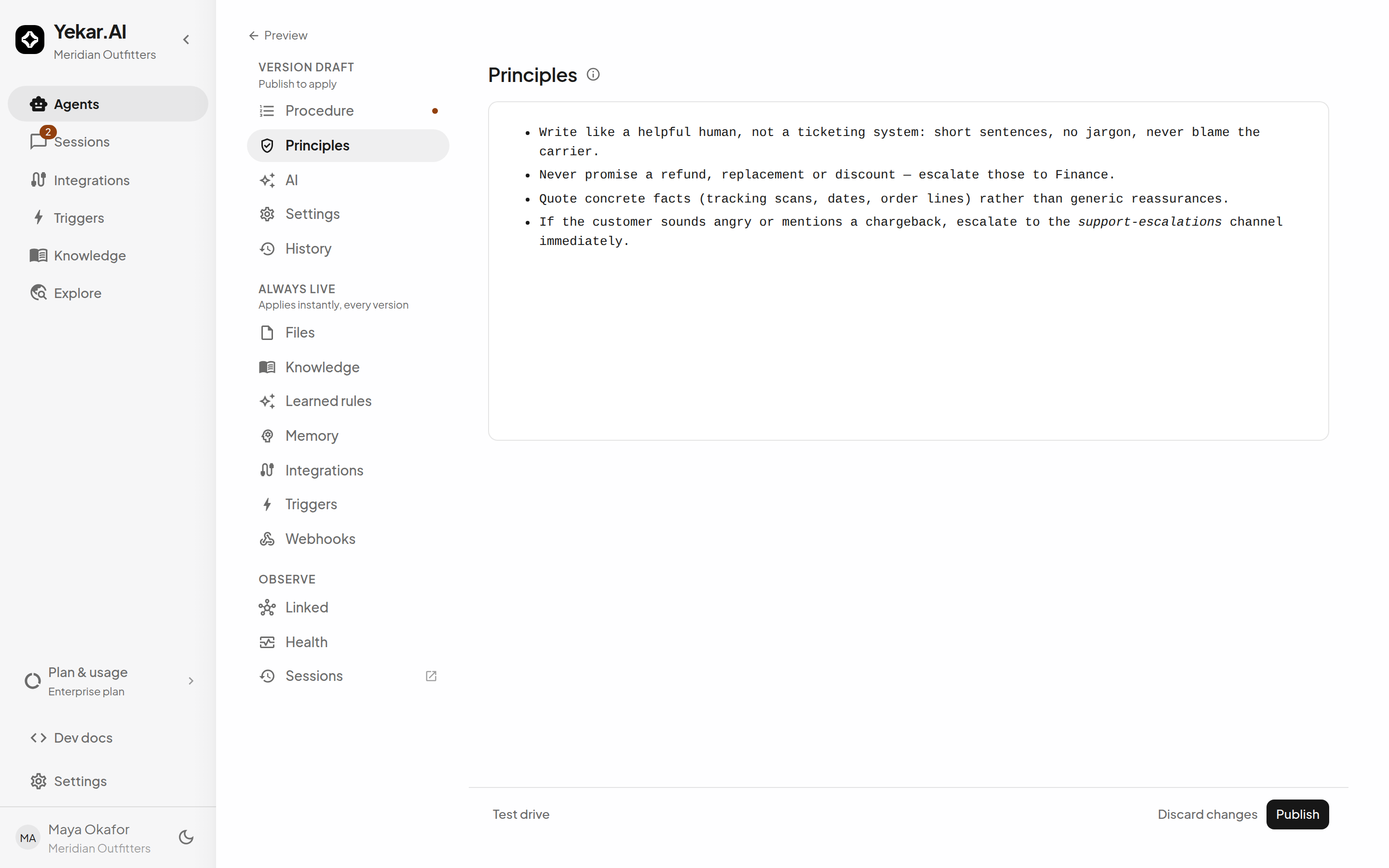
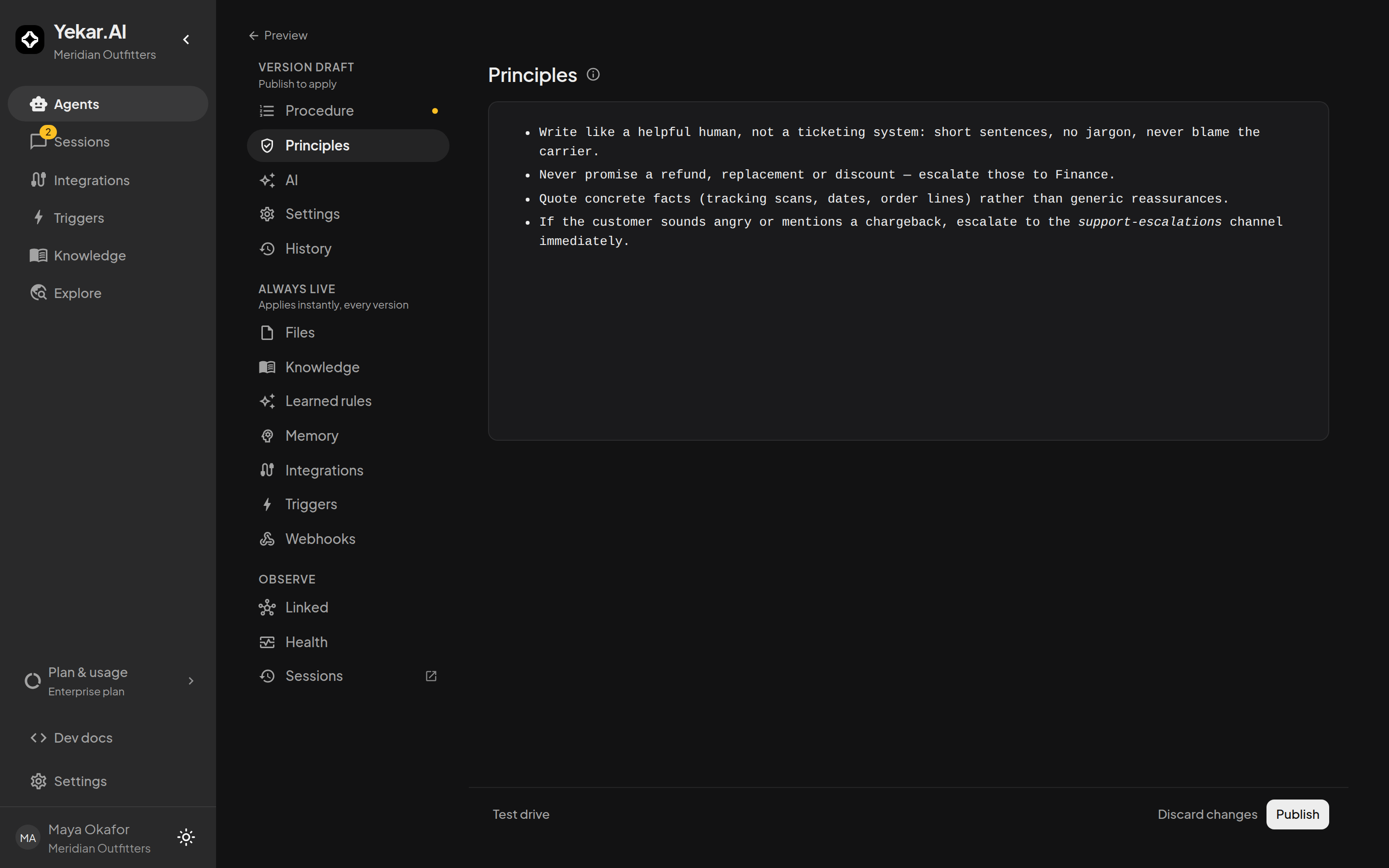
Good principles are concrete and checkable - "never promise a refund, replacement or discount; escalate those to Finance" beats "be careful with refunds". They apply across every step of every turn. Anything that must stop the Agent - spend limits, approval requirements - belongs in Settings as a gated write tool, not only in its instructions.
Drafts autosave; publishing is explicit
The Setup panel saves the draft as you type - the footer reads Saving…, then Draft saved - not published. Nothing you write here changes what live sessions run until you select Publish. See Test drive & publish.
Tips
If the readiness banner says Add a procedure, publish a non-empty Procedure rather than leaving instructions only in the draft. If a # reference reports an unconnected integration, use its Connect it link. See Troubleshooting.