Describe the job, review the agent
The Agent Builder is enabled per workspace, on request. Ask Yekar.AI to switch it on and you can describe an agent in prose and have the Setup drafted for you.
The blank Setup is the hardest part of building an agent. Agent Builder removes it: describe the problem in the same words you would use to brief a colleague, and Builder drafts the agent while you talk - name, principles, procedure, the tools the work needs - with the draft taking shape beside the conversation as it goes.
Nothing it writes goes live on its own. The draft is an ordinary Agent draft, and publishing it needs your explicit approval in the conversation.
Who can use and share Builder
Builder requires Editor or Owner access in the agent's domain, the same permission as creating or editing an agent by hand. Organization Owner/Admin status alone does not grant it.
Once a conversation is linked to an agent, everyone who can edit that agent can read the transcript, send messages and respond to Builder's requests, regardless of who started it. New messages identify the authenticated author. A conversation with no linked agent is private to its creator while they retain edit access to its domain. Losing edit permission removes access; other Editors and Owners can continue the shared conversation. See Roles and permissions.
Open Builder
- Open Agents and select Agent Builder.
- If you can edit agents and flows in more than one Domain, choose which one the agent belongs to. With exactly one, it is chosen for you.
- Describe what the agent should take care of, and send.
The first message creates the draft agent, so there is nothing to name or configure first. Builder replies as it works, and the pane beside the conversation fills in.
Read the draft while it is written
The draft pane has two views:
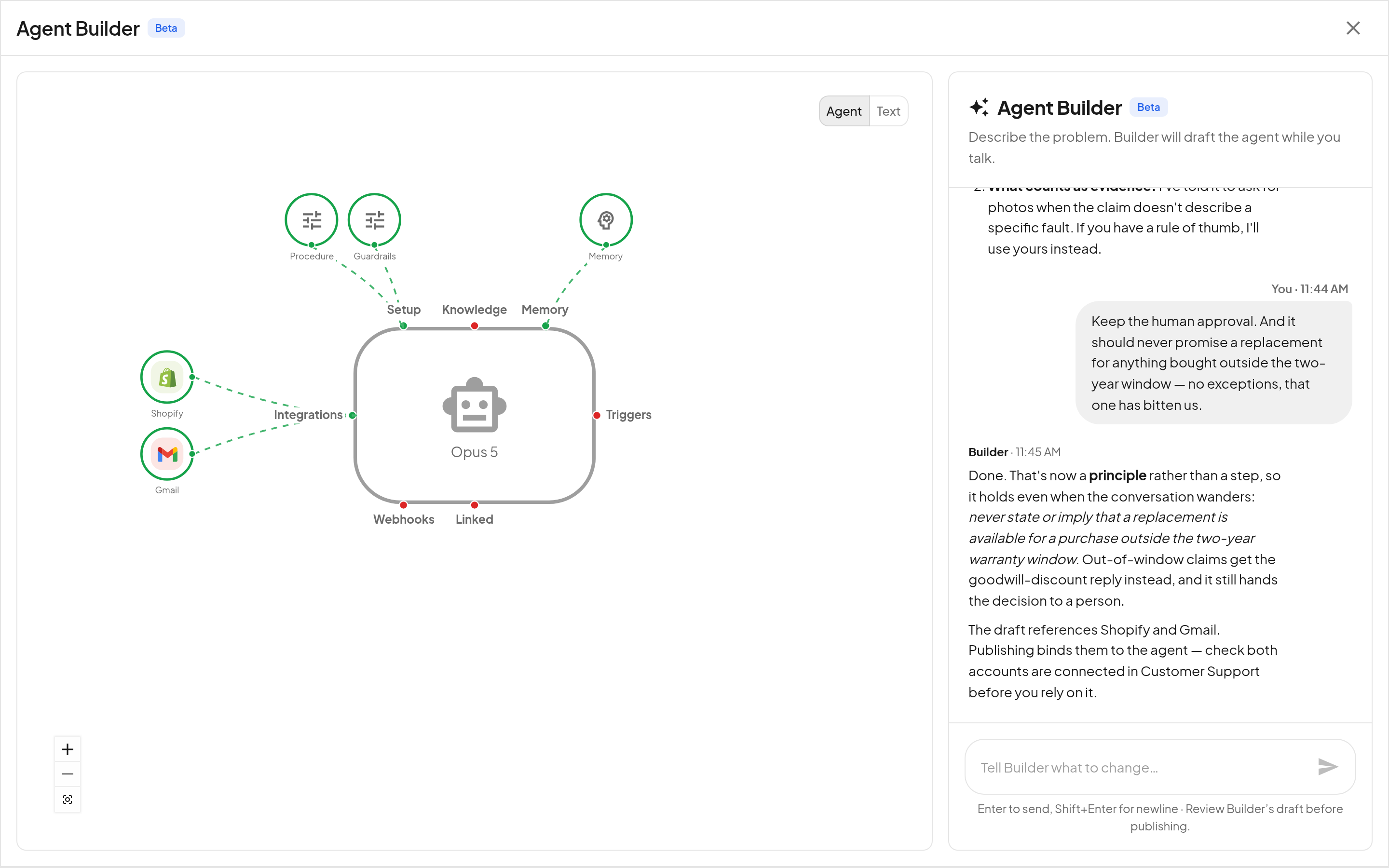
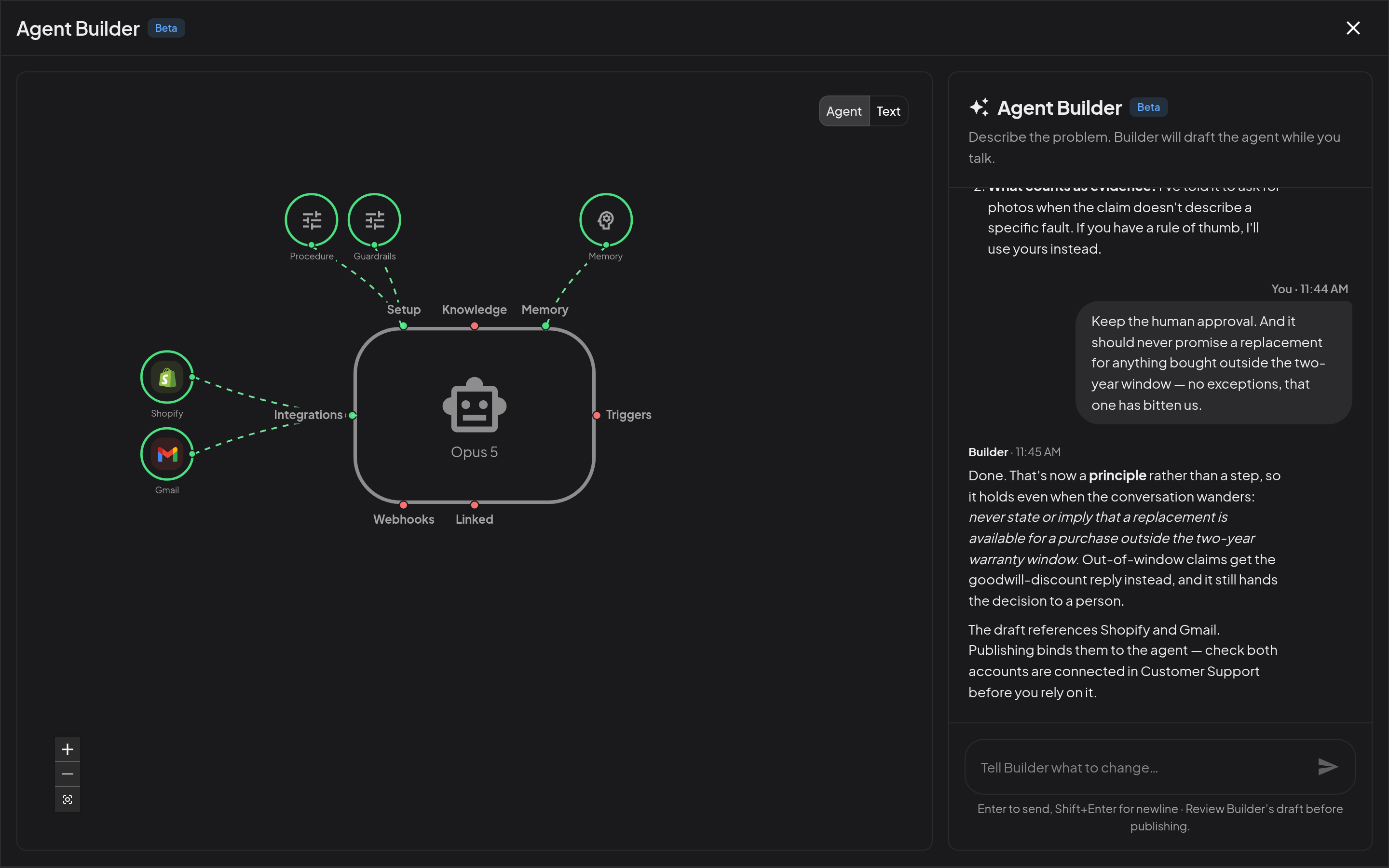
- Agent - the agent's anatomy: the same live map you get on the Agent page, drawn from the draft as it exists right now.
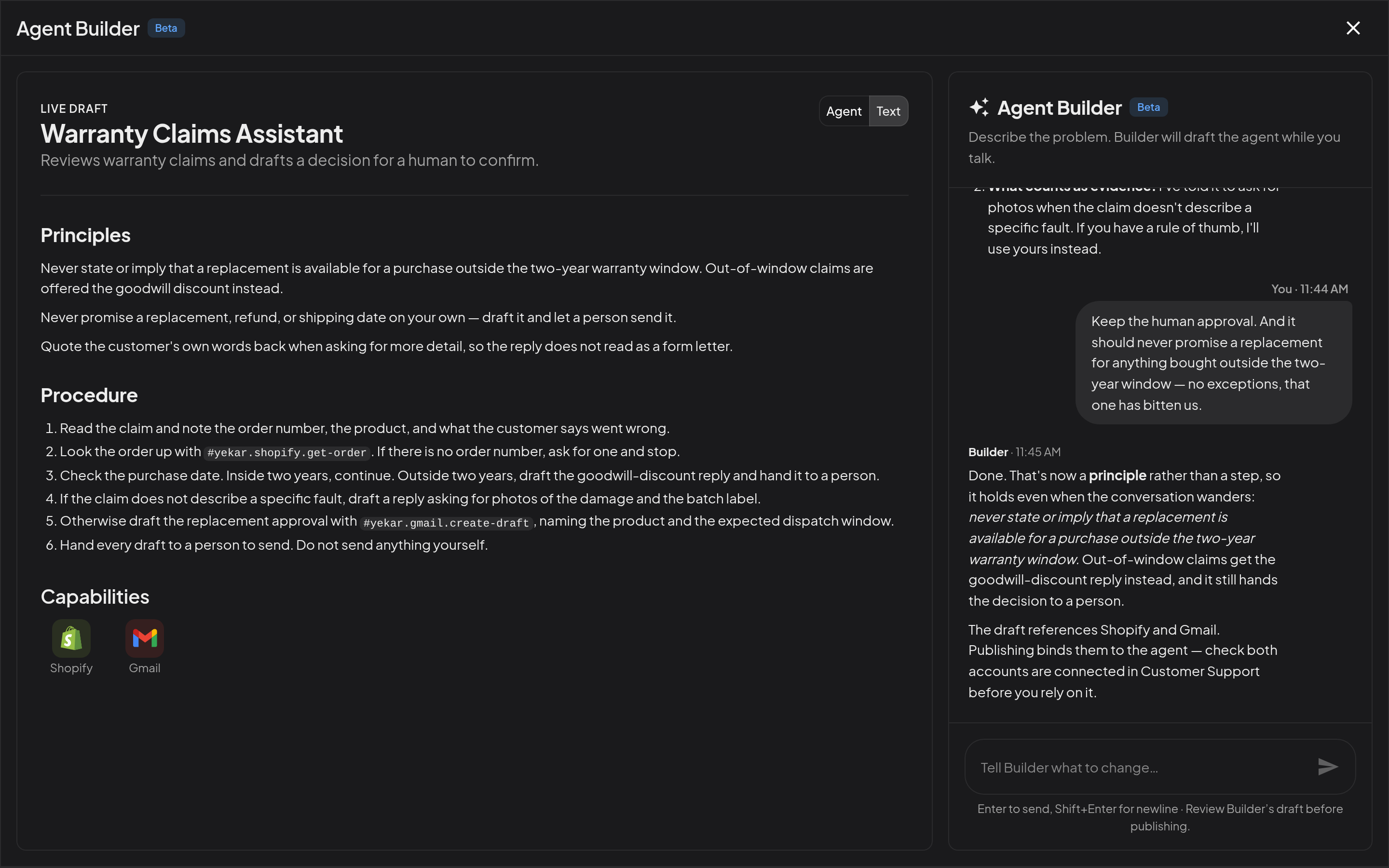
- Text - the draft in full: Principles, Procedure with its
#tool references, and Capabilities.
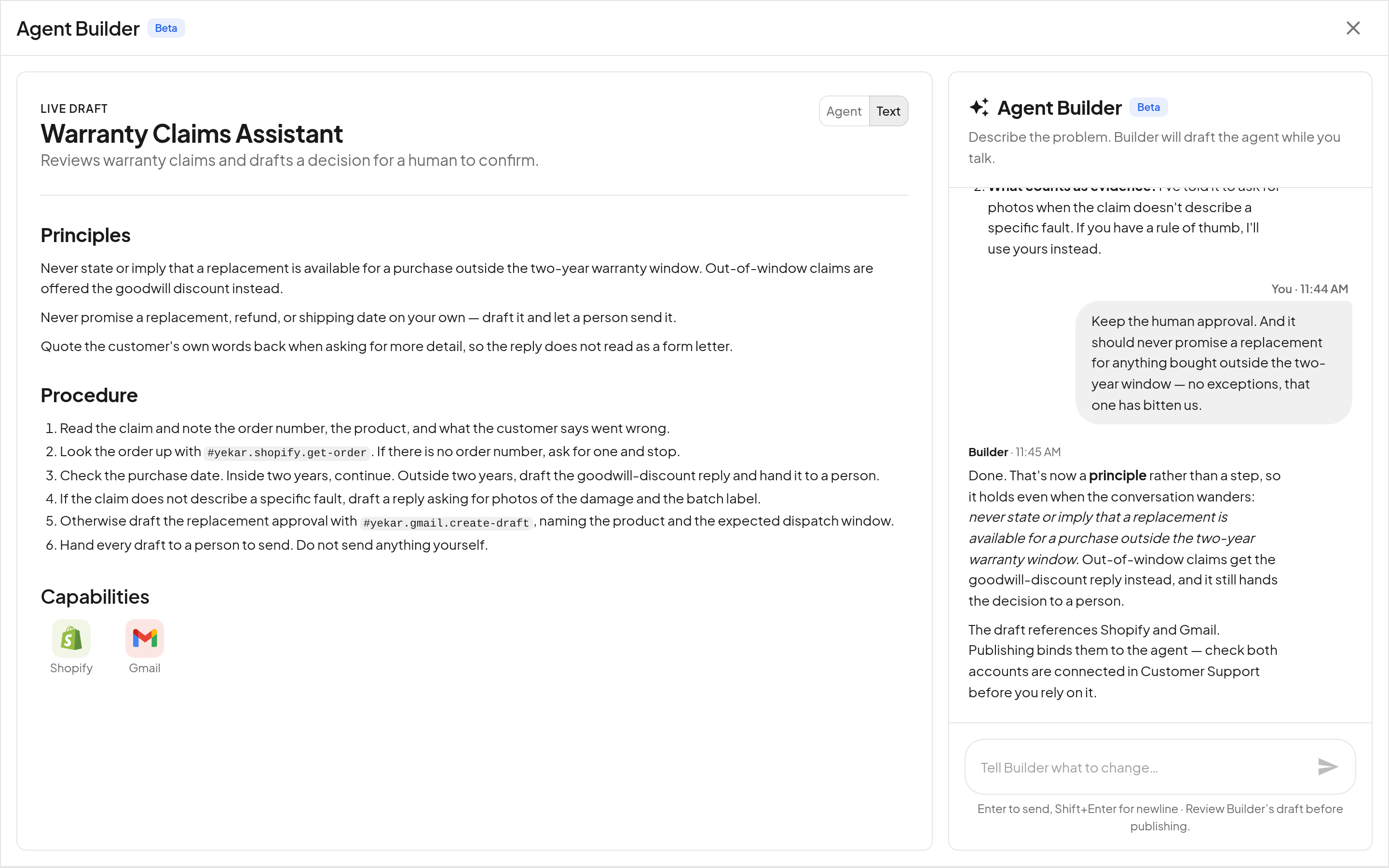
Capabilities lists every integration the draft's procedure references - what this agent will need an account for. Publishing binds them; connecting the accounts is yours to do in Integrations. Builder writes the references, and cannot see or use credentials itself.
On a narrow screen the pane moves behind the Preview button in the header.
What Builder can and cannot change
Builder works through the same authoring surface a person uses, so its reach is exactly the agent's draft:
| It can | It cannot |
|---|---|
| Create the agent in the domain you chose | Create a Flow - Builder makes agents |
| Write and rewrite Principles and Procedure | Connect an integration or enter a credential |
| Set the model and which tools need approvals | Create triggers, webhooks, or API keys |
| Choose which organization knowledge the agent reads | Touch any other agent, or anything already published |
| Check the draft's tool references resolve | Publish without asking you first |
It also acts as you, not as a service account: every change it makes is subject to the same permissions you have. It can only create an agent in a domain where you could have created one yourself, and a domain you cannot edit is not offered.
Approve before it publishes
When Builder judges the draft ready, it stops and asks in the conversation - Approve or Deny, with the draft still on screen beside it.
- Approve publishes the draft as the next numbered revision, starting at version 1 for a new agent - the same revision history as publishing from Setup.
- Deny leaves the draft where it is and keeps the conversation going.
Read the draft before you approve. The Text view is the whole of what will go live, and the Publish rules are unchanged: publishing is one-way, and every later change goes through the same review.
Keep working on it
- Carry on in the conversation. Tell Builder what to change - "ask for the order number first", "never refund above £200 without a human" - and it revises the draft.
- Carry on in Setup. The agent is a normal agent. Open it from Agents and edit the Procedure, knowledge, integrations or its AI and Settings panels by hand at any time.
- Come back later. Open Builder from the agent to resume that agent's conversation where you left it. Each agent keeps one shared Builder conversation. New session begins a separate build for a new agent.
A Builder conversation that never produced an agent is discarded after a day, so an abandoned attempt leaves nothing behind.
Tips
Builder is a starting point, not a substitute for reading what it wrote - treat its draft the way you would treat a colleague's first pass. Test drive before you rely on it: the test drive runs the draft with real tools, and it is the fastest way to find an instruction that reads well but does not survive a real request. If Builder references a tool your workspace has not connected, the agent will publish fine and fail at that step - connect the account from Integrations first.